Vineyard
The forgotten grapes of Gaillac
Mauzac, Loin de l'œil, Prunelart, Ondenc, Verdanel: Gaillac is one of the rare French vineyards built on its own native grapes. Some had all but vanished. Here's how they were saved, and what they give in the glass.
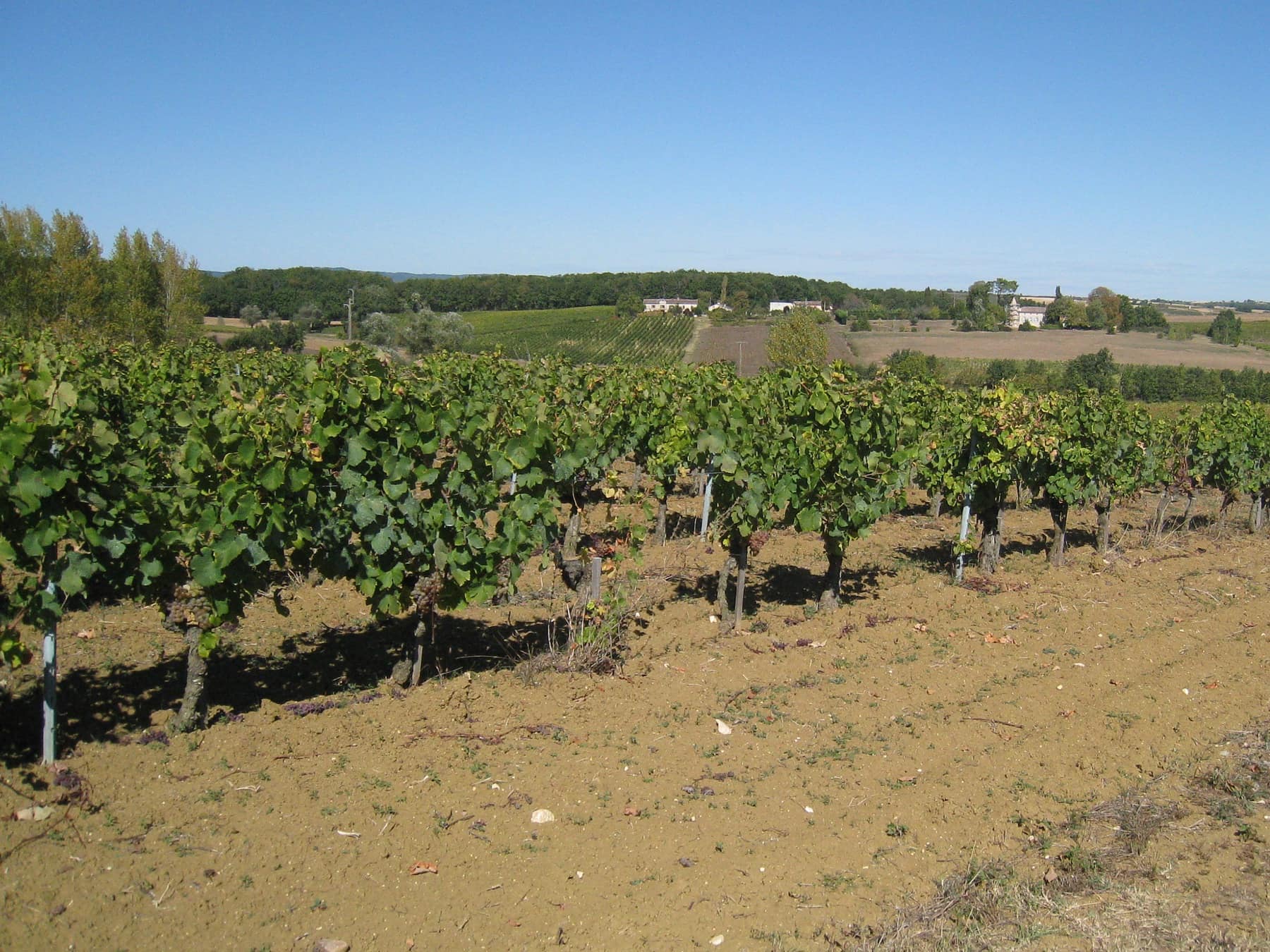
Most French vineyards now speak the same language: merlot, chardonnay, syrah, sauvignon. Gaillac is the exception. Here they hold on to names you hear nowhere else — Mauzac, Loin de l’œil, Braucol, Duras, Prunelart — and that is precisely what makes its wines worth the detour. Since 2019, the appellation has even chosen to put these native grapes back centre stage. Behind that singular vocabulary lies a story: of varieties that phylloxera and convenience had nearly erased, and that a handful of growers went looking for, one by one.
Why Gaillac never forgot its language
In the nineteenth century, the phylloxera aphid ravaged the French vineyard. In rebuilding, many regions swapped their temperamental old grapes for more docile, more productive ones. Gaillac took losses too: Ondenc all but disappeared, Prunelart was given up for extinct. But the region kept the memory of its grapes — and, from the 1980s on, set about reviving them.
It’s also at Gaillac that the “ancestral method” (or Gaillac method) is championed, the oldest way of making a wine sparkle: the bubble is born in the bottle from the grape’s own sugars alone, with no added liqueur, unlike the later champagne method. Growers here like to point out that their sparkling wine predates Champagne’s — a local pride more than a settled fact: neighbouring Limoux claims the same antiquity, texts in hand. Hold on to what is beyond dispute: at Gaillac, they were making bubbles long before champagne ever existed.
The Plageoles saga, or the grapes rediscovered
If these varieties are still here, much of the credit goes to one family from Cahuzac-sur-Vère, the Plageoles, across four generations. Marcel replanted Ondenc as early as 1983. Robert — the best-known figure — made the hunt for lost grapes his life’s work: he turned up Prunelart in an old plot, had the vines’ identity confirmed, and went to the Marseillan conservatory, on the Languedoc coast, for the varieties that no longer existed at Gaillac. Bernard took over the estate and converted it to organic in the early 1990s; Florent and Romain now tend what amounts to a living conservatory.
From that patient work came two rare wines, now signatures. The vin de voile: a mauzac aged for years under a veil of yeast, the cask left unfilled — exactly the principle of the Jura’s vin jaune, rounder, with its aromas of walnut and toasted hazelnut. And the vin d’Autan: a sweet Ondenc whose grapes dry in the south wind before pressing. Two proofs that the forgotten grapes weren’t forgotten for nothing: someone just had to rediscover how to make them sing.
The whites, heart of the Gaillac identity
Mauzac is the pillar. Apple, pear, a supple weave: it’s drunk dry, sweet, perlé, and it’s the only grape allowed for the ancestral method. It even comes in several robes — roux, green, yellow — the roux, rich in sugar, dominating the hillsides.
Loin de l’œil is its aristocratic counterpart. Its Occitan name, “Len de l’el”, describes its anatomy: the berry grows at the end of a long stalk, far from the bud. More mineral, more complex, it’s grown almost nowhere but here. Around them orbit Ondenc, rescued in the 1980s and king of the great sweet wines, Verdanel, a cousin of Savagnin recovered in extremis, and Muscadelle, more widespread, lending its acacia notes to blends.
The reds, from rustic to resurrected
On the red side, Braucol leads the dance. It’s the local name for Fer Servadou, and it’s what signs a Gaillac red: blackcurrant, raspberry, a frank, no-nonsense chew. Beside it, Duras, a grape born in the Tarn, brings pepper and spice — so characteristic of the appellation that the 1970 decree made it compulsory in blends.
And then there’s Prunelart, the survivor. Recorded as early as 1537, given up for dead after phylloxera, it was found again in old vines and brought back into the appellation in 2008. Science even handed it a coat of arms: a genetic study showed it to be one of the parents of Malbec, the great red of Cahors. A grape thought finished, revealed to be the forebear of a star. The whole Gaillac area is in that story.
For anyone keen to go further than the glass, the detail of each variety and appellation is on the Gaillac grapes page — so that next time, you’ll know exactly what’s in your glass.