Nature
Gaillac by bike: three days without a car
Arrive by train, leave by train, and do everything by bike in between. Three days along the Tarn — Gaillac, Lisle-sur-Tarn, Rabastens — without ever touching a steering wheel. Here's the route, the distances, and what you'll see.
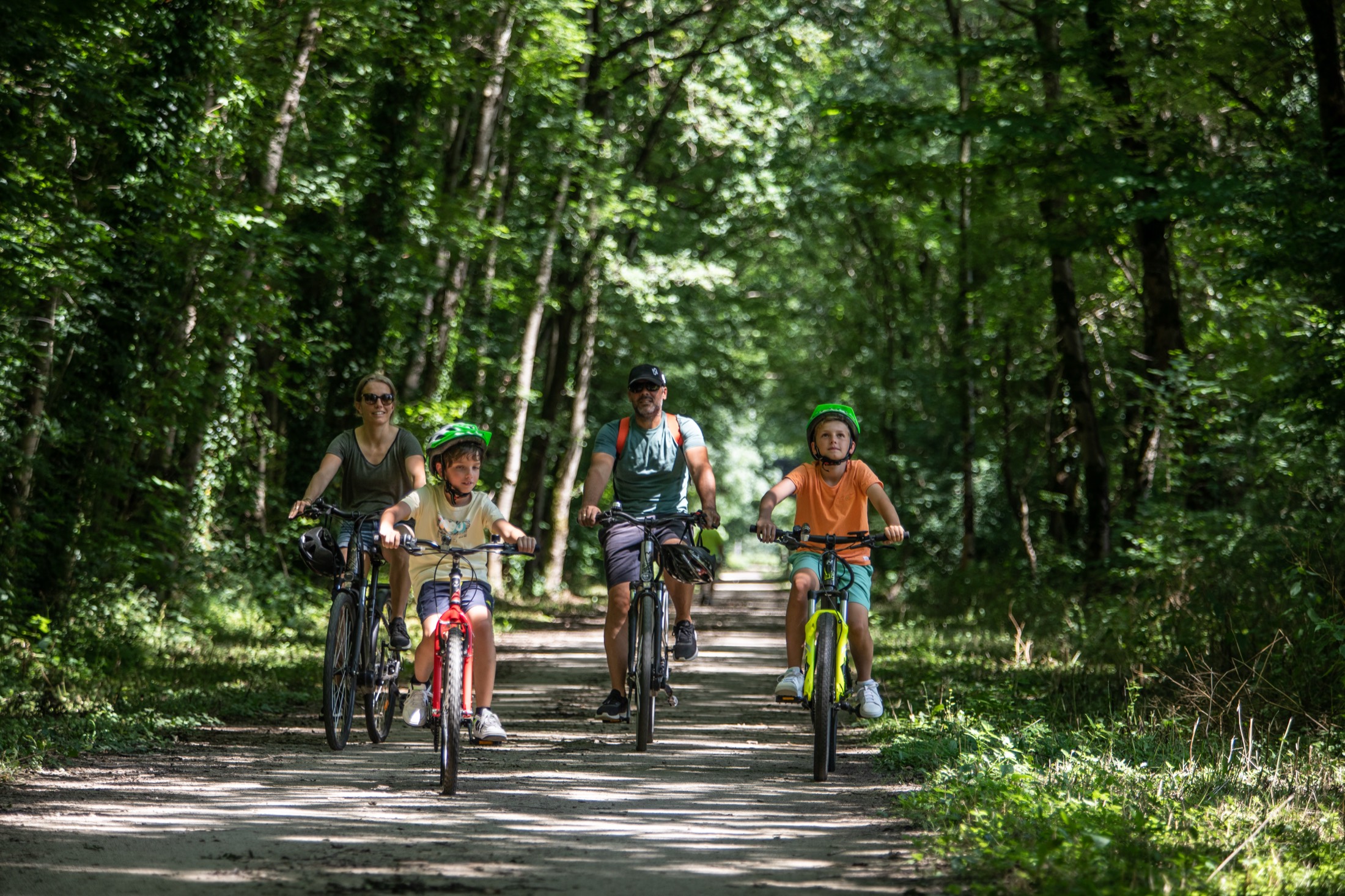
You can explore the Gaillac area without a car. Not by going without, not by walking three hours in the sun between two villages: by bike, following the Tarn, with the train covering the long distances for you. Three days, three brick bastides, a river from start to finish. Here’s how it’s done.
The train does half the work
Gaillac sits on the TER liO line between Toulouse and Albi — one hour five from Toulouse-Matabiau. The good news: the same line serves Rabastens-Couffouleux and Lisle-sur-Tarn, the exact two villages on this route. So you can reach any stage by train and ride the rest.
Bikes travel free on board, up to six per train. One detail that matters: since 1 May, reserving the bike space is compulsory at weekends, and every day during the summer holidays. You book it with the ticket, on the liO website. Without it, you can end up on the platform watching your train leave.
There’s no obvious bike-hire at the station, though. The simplest option is to bring your own bike on the TER. The valley suits it well: the Tarn valley cycle route (V85) runs along the river, flat, and it’s what you follow most of the time.
Day 1 — Gaillac, setting down the wheels
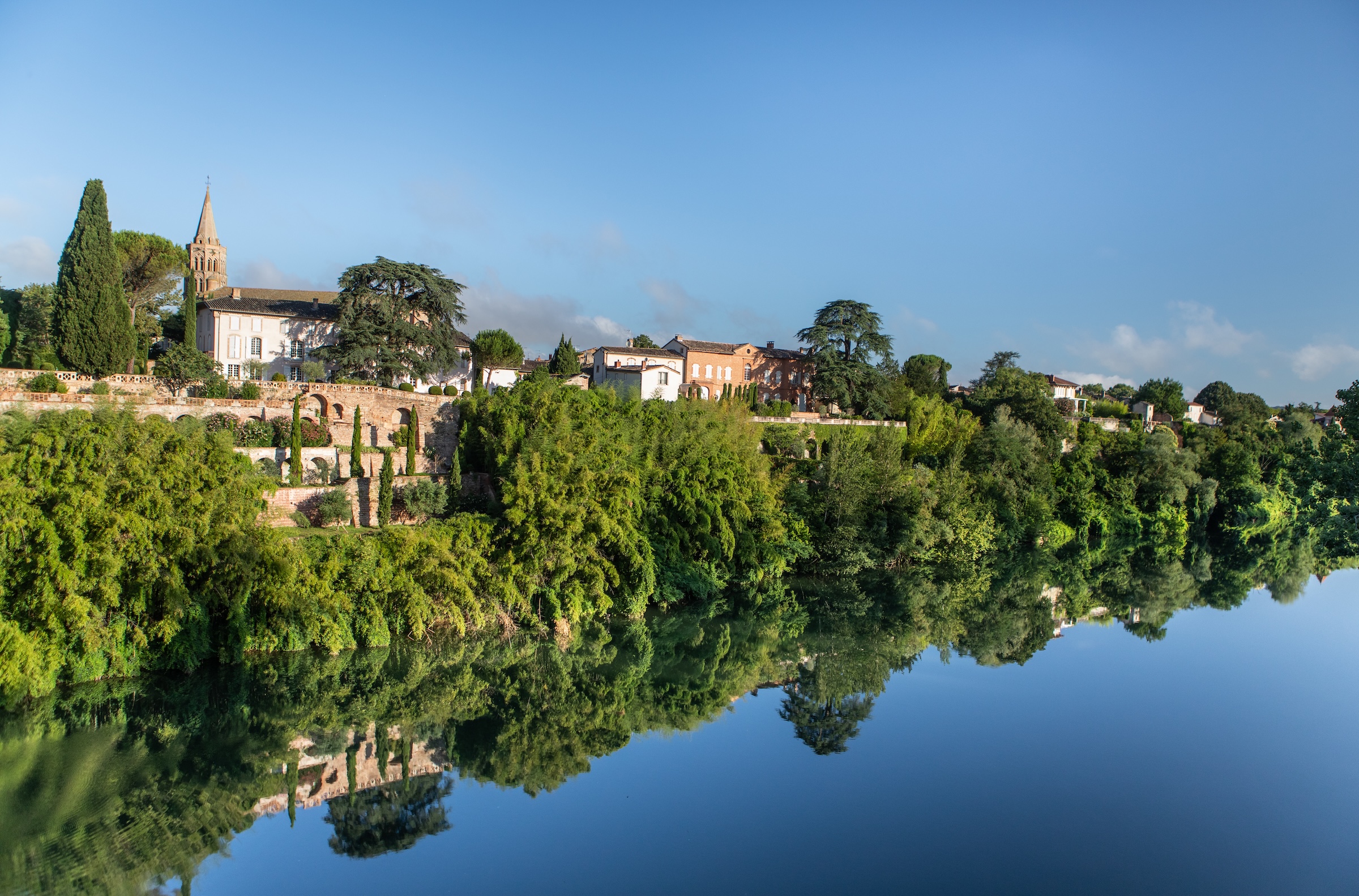
You reach Gaillac station in the late morning, drop your bags, and leave the car where it has never been: nowhere. The afternoon is enough for the town. Saint-Michel abbey on the bank of the Tarn, the place du Griffoul with its half-timbered houses, the riverside you walk down to watch the local brick turn pink at the end of the day.
In the evening, a glass of natural Mauzac at the foot of the abbey, and that’s it. The real start is tomorrow.
Where to stay in Gaillac — take your pick: Hôtel La Verrerie right in the centre, or Maison d’Hôtes Delga for a room with character.
Day 2 — Lisle-sur-Tarn, the largest arcaded square in the South-West
About ten kilometres separate Gaillac from Lisle-sur-Tarn, almost entirely flat along the river. Allow a gentle hour, more if you stop to watch the Tarn.
Lisle is a bastide founded in 1248, and its arcaded square is the largest in the South-West — a quadrangle of brick galleries you once moved under, sheltered from sun and rain. At its centre, the Griffoul fountain, in Renaissance bronze, is a listed monument. Around it, the Maison de la Vigne et du Vin to understand the appellation, and the Raymond-Lafage museum for the draughtsman born here in the 17th century. The town takes an hour to visit, terrace included.
Where to stay in Lisle — for a change of scene: the Gîte de Fontjalabert out in the countryside, or a hotel-style chalet on the campsite side.
Day 3 — Rabastens, the hidden frescoes
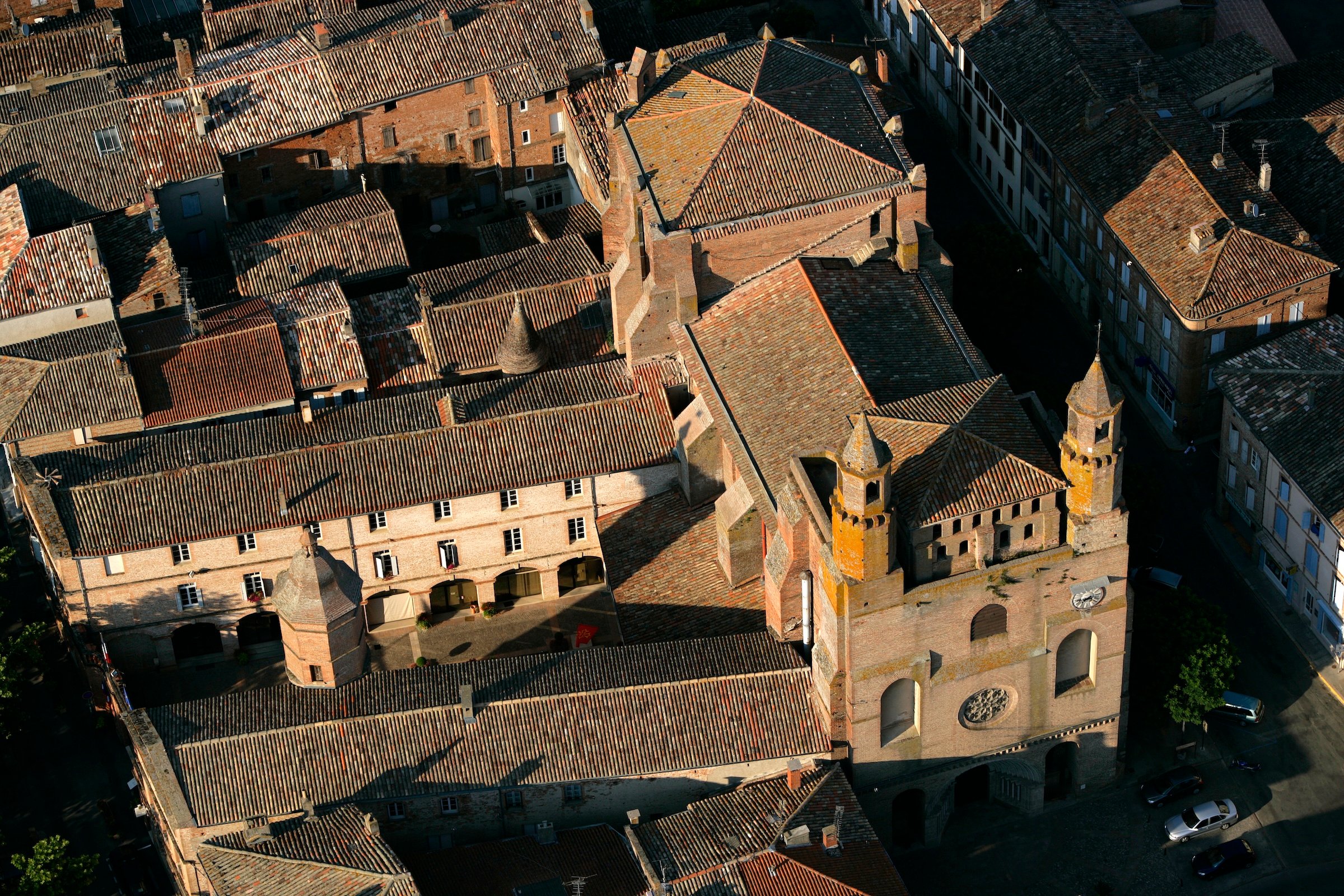
From Lisle to Rabastens, another ten kilometres in the same spirit — the river on your left, the vines on your right. Rabastens hides what neither earlier stage has: the church of Notre-Dame-du-Bourg, a UNESCO World Heritage site as part of the routes of Santiago de Compostela. Step inside: beneath the brick lies a medieval painted decor of rare density, frescoes and coloured vaults you’d never guess from outside.
From there, Rabastens-Couffouleux station takes you back to Toulouse in about forty minutes, or to Gaillac the other way if you left a room behind. The bike goes back on the train, and the loop is closed.
Where to stay in Rabastens — to stretch the trip by a night: Le 9 en Cuisine, a hotel-restaurant on place Saint-Michel, or Sûn Chambres d’hôtes.