Nature
Toulouse to Gaillac by bike: up the Tarn valley
Reaching Gaillac under your own steam, without a train or a car: some seventy kilometres up the Tarn along the valley véloroute. A real day in the saddle — here's the route, the villages, and the things people don't always tell you.

You can arrive in Gaillac under your own steam. Not in fifteen minutes, and not without sweating: by bike, riding up the Tarn from Toulouse, some seventy kilometres of river, vines and brick villages. It’s a real day in the saddle, not to be confused with a Sunday stroll. But it’s flat, it’s beautiful, and at the end there’s the abbey by the water. Here’s how it’s done — and what people don’t always tell you.
Leaving Toulouse, back to the canal
Toulouse is a city of bikes and canals, and you might assume you reach Gaillac along the Canal du Midi. It’s the opposite: the canal heads south-east, towards Carcassonne and the Mediterranean. For Gaillac, you turn your back on it. North-east, towards the Tarn valley.
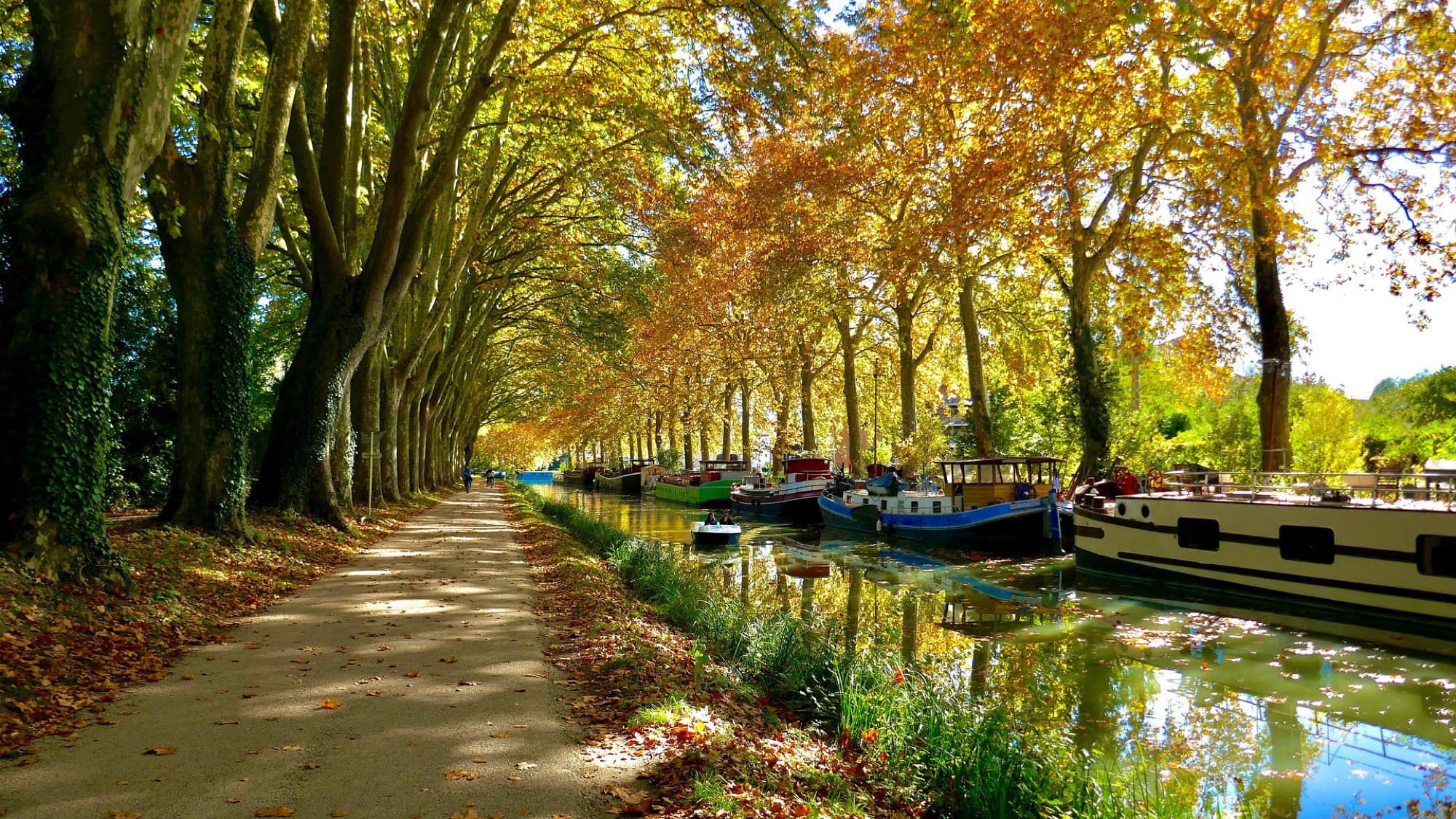
The first few kilometres still run through the city, along the water, before the suburbs let go. You follow the river, pass under the plane trees, and it’s only once Toulouse is behind you that the countryside really begins — somewhere around Saint-Sulpice-la-Pointe, where you pick up the Tarn and the véloroute that won’t leave it again.
The Tarn valley véloroute
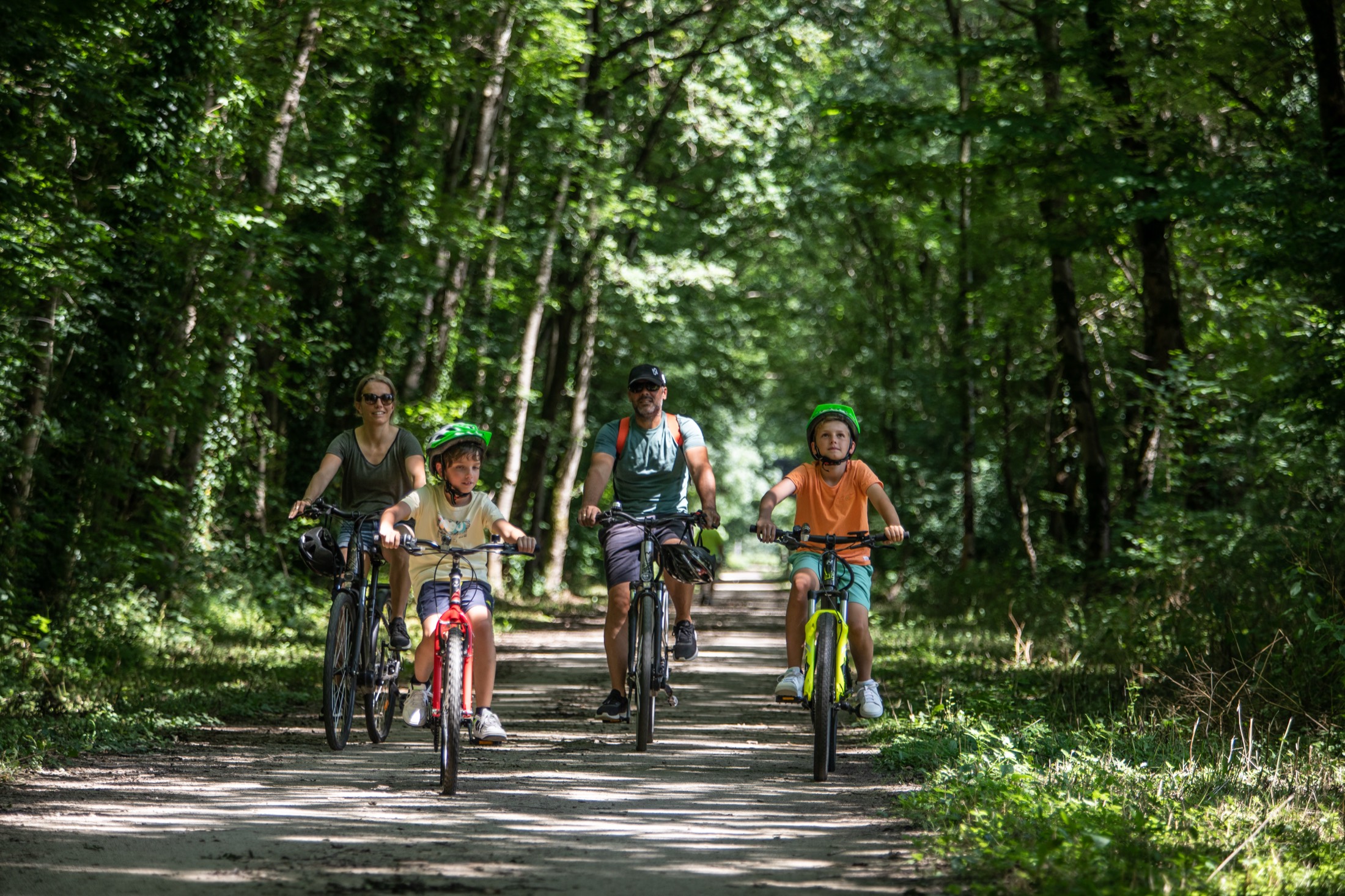
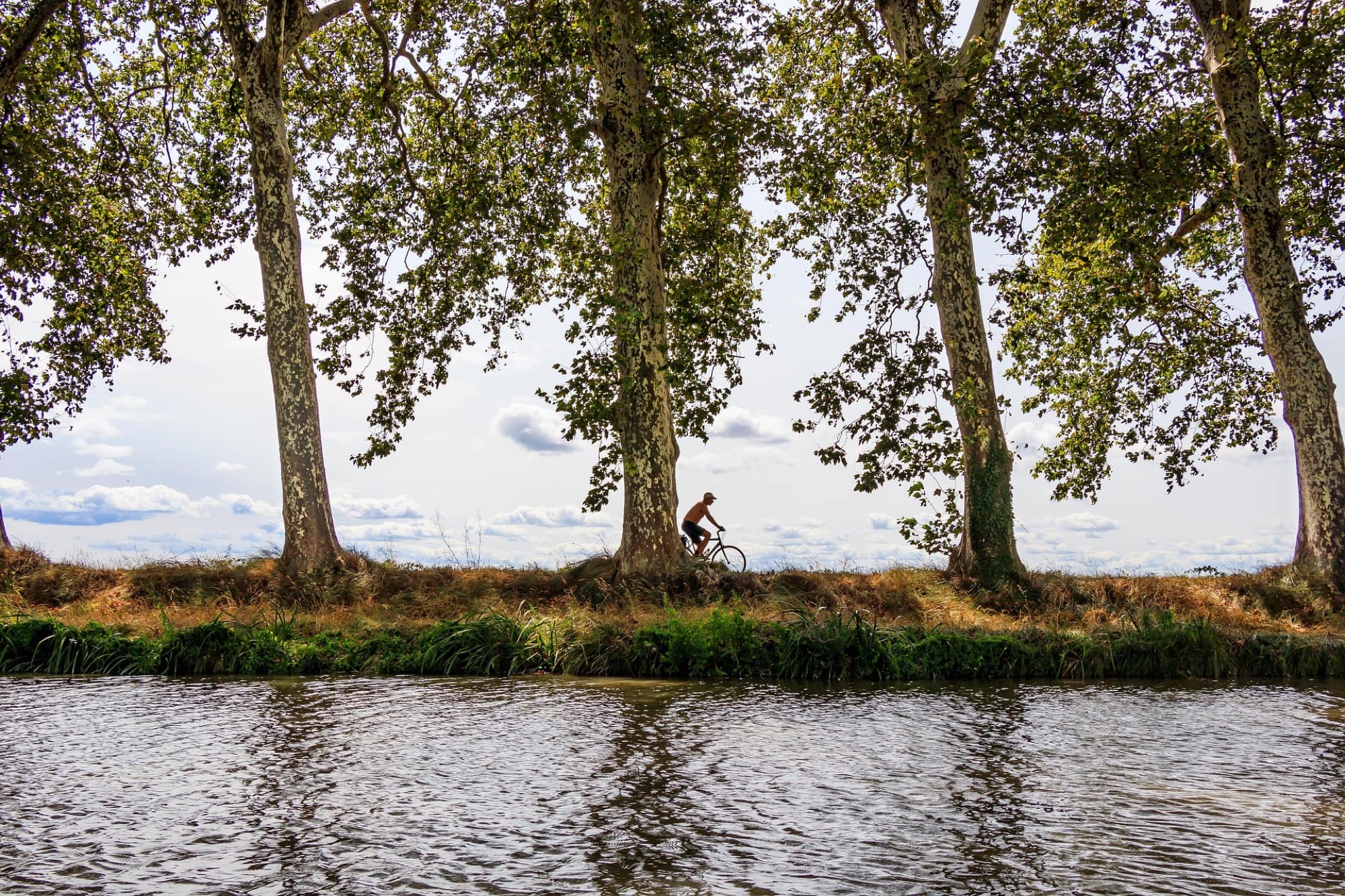
This is the thread that holds it together: the Tarn valley véloroute, the V85. It runs upstream, flat, from Saint-Sulpice all the way to Albi and beyond — Gaillac sits right on its line. You follow it most of the time, the river within sight, vines on the slopes.
Let’s be honest: it isn’t a smooth cycling motorway from start to finish. The V85 alternates between real greenways, quiet and segregated, and stretches on small roads shared with cars. It is neither continuous nor fully waymarked everywhere. Nothing alarming for a reasonably attentive cyclist, but don’t set off picturing seventy kilometres without ever meeting a car. The reward, though, is constant: the Tarn, always there, and three bastide towns to put a foot down in.
From village to village
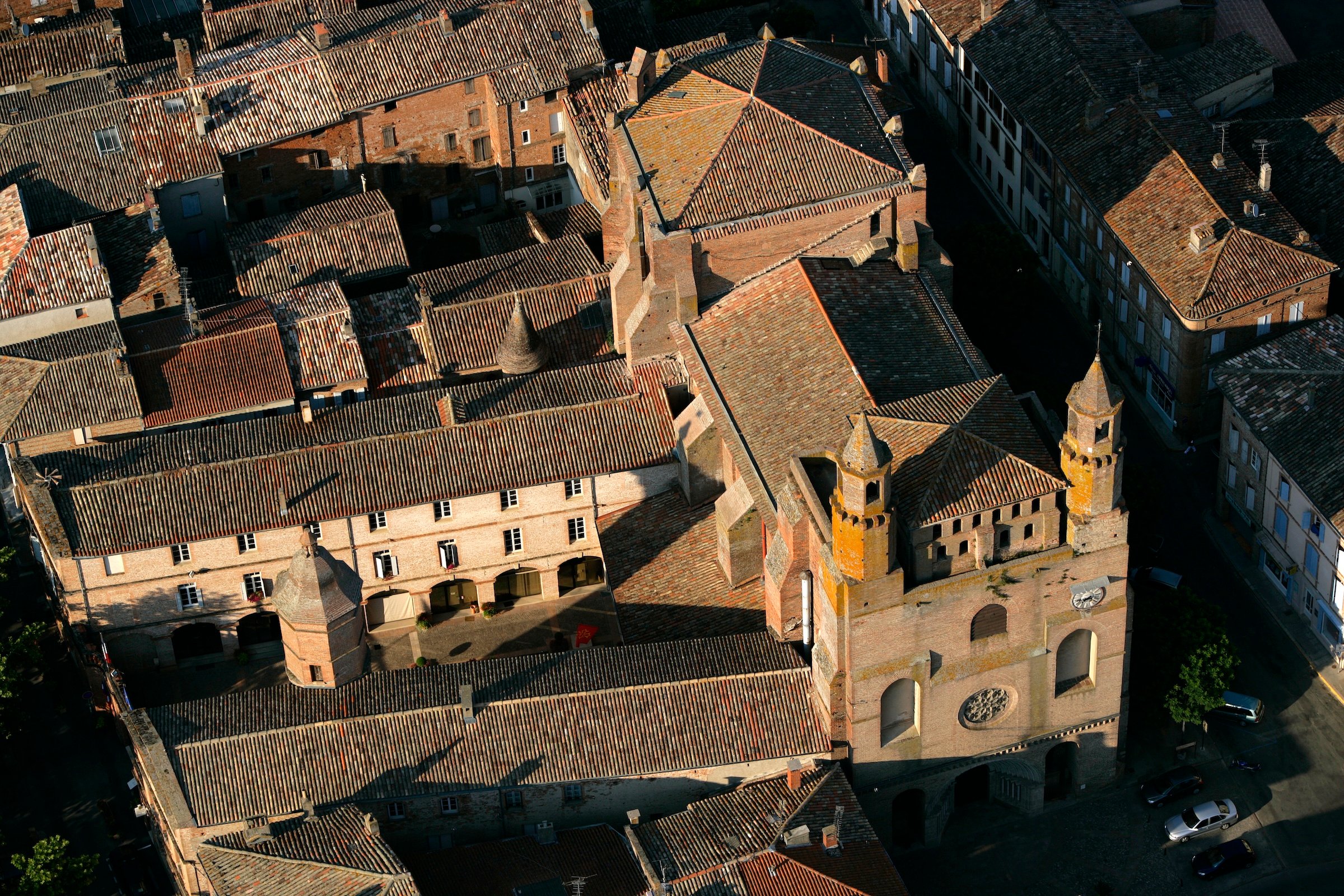
This is the whole point of taking the route slowly: you stop. Saint-Sulpice-la-Pointe first, a thirteenth-century bastide where you rejoin the cool of the river. Then Rabastens, and its well-kept secret: the church of Notre-Dame-du-Bourg, a UNESCO World Heritage site on the pilgrim routes to Santiago. Brick on the outside; inside, a medieval painted décor of rare density. Well worth dismounting for.
Another ten kilometres or so and here is Lisle-sur-Tarn, whose arcaded square is the largest in south-west France — a quadrangle of brick galleries, a listed Renaissance fountain at its centre, and enough terraces for a well-earned break before the last leg.
Arriving in Gaillac
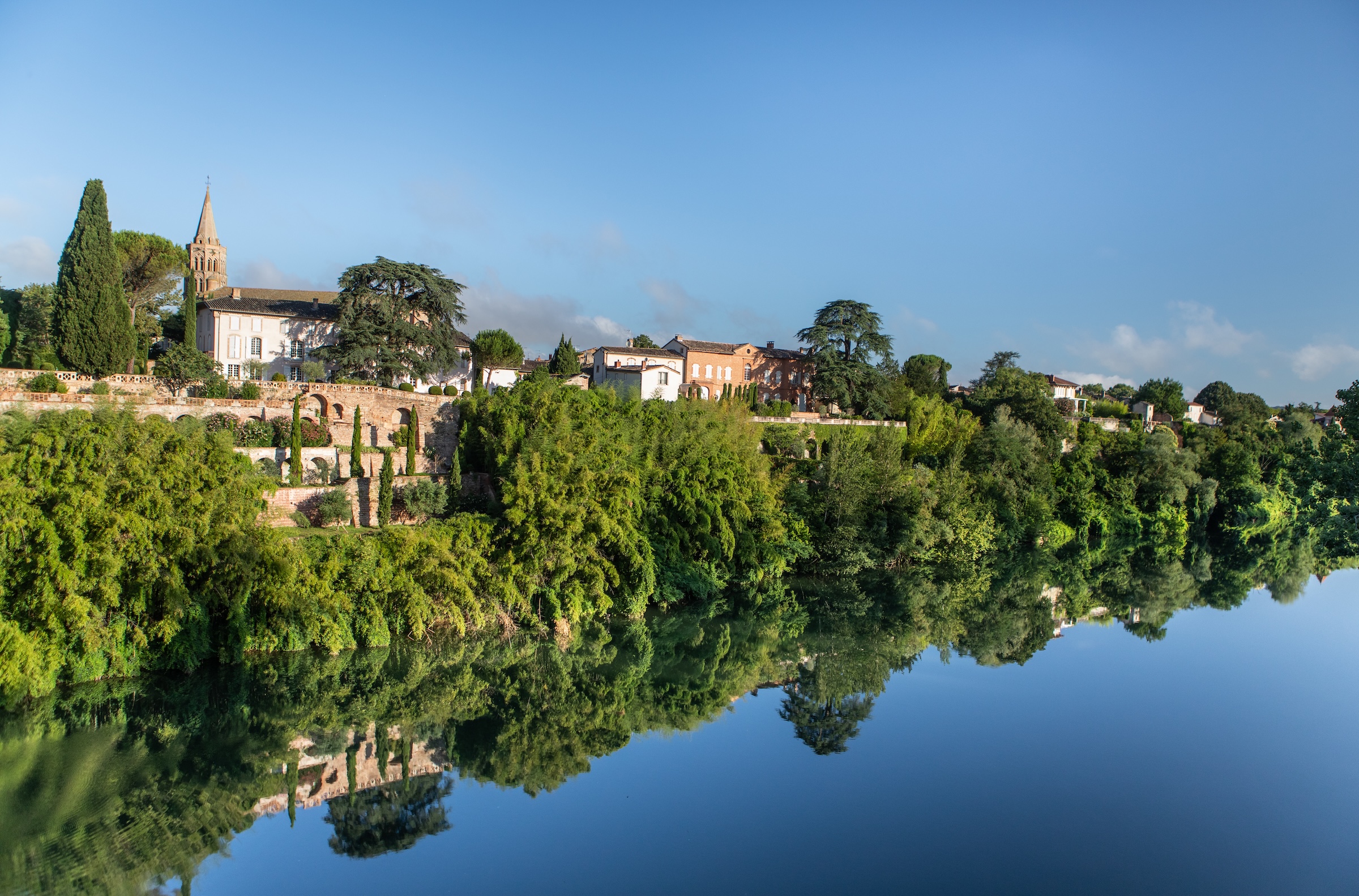
The final kilometres come in the same spirit, river on the left, vines on the right, until Gaillac’s pink brick appears by the water. This is what you rode for: Saint-Michel abbey set on the bank, place du Griffoul, and the quiet satisfaction of having arrived on muscle alone.
Once you’re here, the vineyard is made for bikes: short loops from estate to estate, all flat. In spring 2026, the touring festival Vélo Vin Copains made its first stop in the vineyard for la Bicyclettine: a thirty-kilometre loop from Château Clément-Termes in Lisle-sur-Tarn, four tasting stops at the estates and a final open-air guinguette at the foot of the slopes — bike, wine and friends, just as the name promises. A first Gaillac edition, run with the tourist office and the Gaillac Wine House: one to watch for in spring, with no certainty it returns every year. And if you enjoyed that final stretch, our three car-free days take it slower and more heritage-minded: the same Gaillac, Lisle-sur-Tarn and Rabastens, but spread over three days instead of one closing leg, the train handling the longer hops — time enough to step inside the churches and linger under the arcades. The bike, for its part, goes back on the train whenever you want to head home.