Nature
Where to fish around Gaillac
Eight kilometres of banks on both sides of the river, in the middle of Gaillac, with a five-metre hole right below the abbey. Then the Vère for coarse fish and the Ségala for predators. The day permit costs twelve euros.
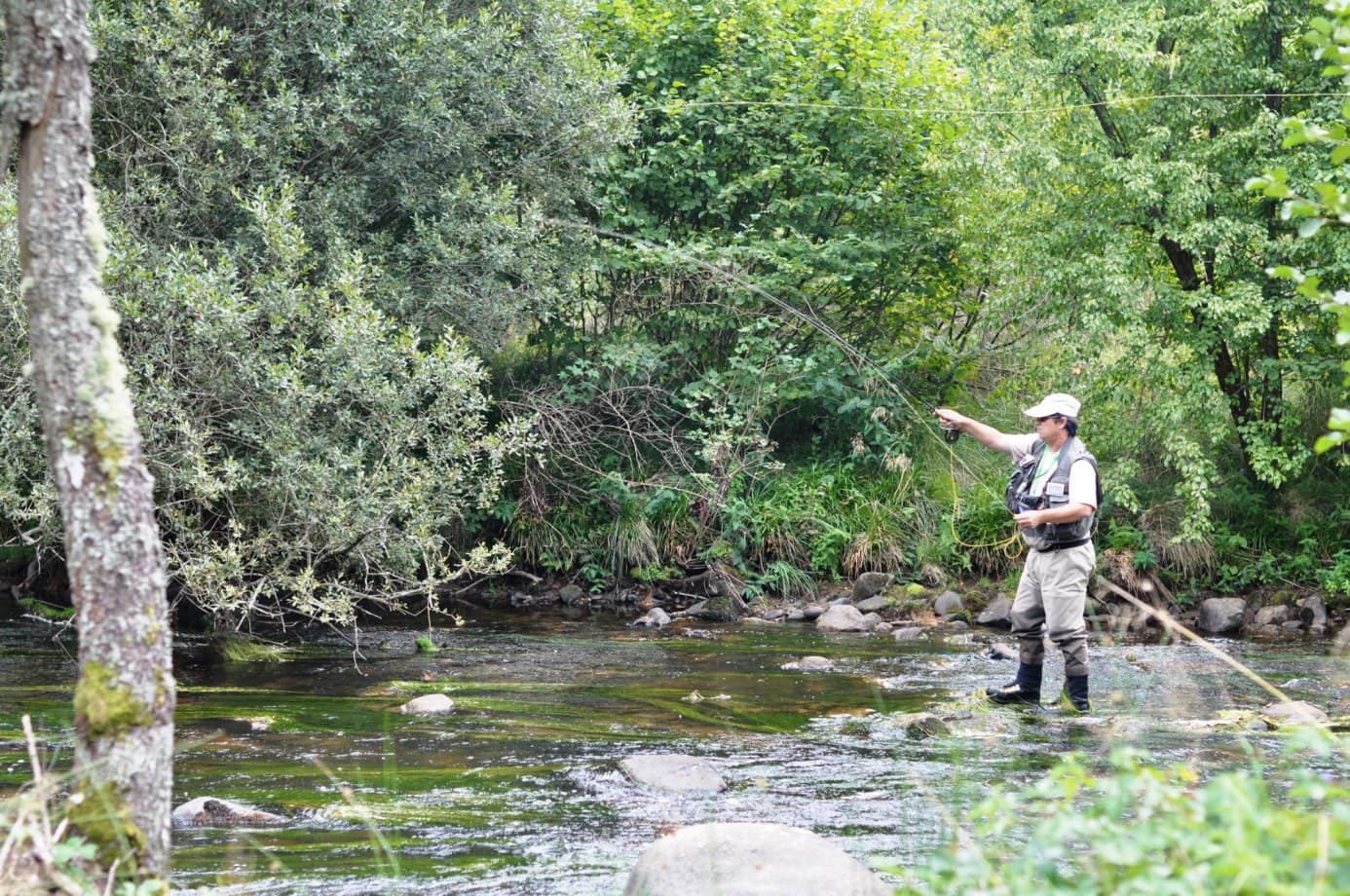
People always assume you have to drive somewhere to fish. Around Gaillac that is simply wrong: the most accessible beat starts at the edge of town, and it runs for eight kilometres.
In the middle of Gaillac, eight kilometres on both banks
The Gaillac beat runs along both banks between the Rivières weir and the Pont Saint-Michel — 8,000 metres of bank, in second-category water, which is to say the domain of coarse fish and predators.
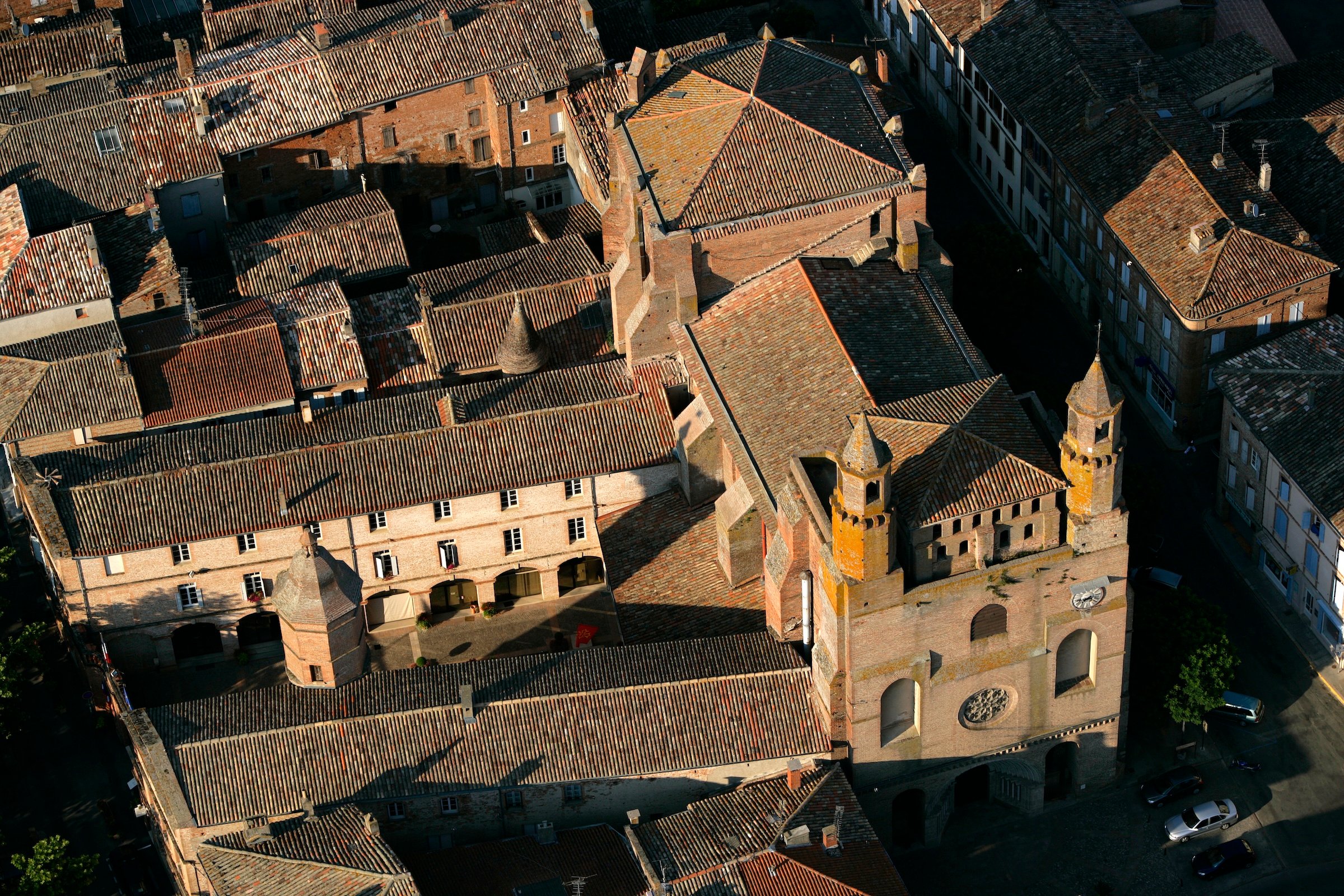
Two spots are worth knowing before you pick your place. First, directly below Saint-Michel Abbey, there is a hole five metres deep where good perch and zander turn up regularly, along with some solid catfish. You fish there at the foot of the oldest building in town, which gives the session a setting few rivers can offer.
Then there is the Gaillac weir. The sill creates oxygenated turbulence, and oxygen concentrates predators — it is the most reliable mechanism on the whole beat. If you were to remember one spot, make it that one.
Downstream: fourteen kilometres to Rabastens
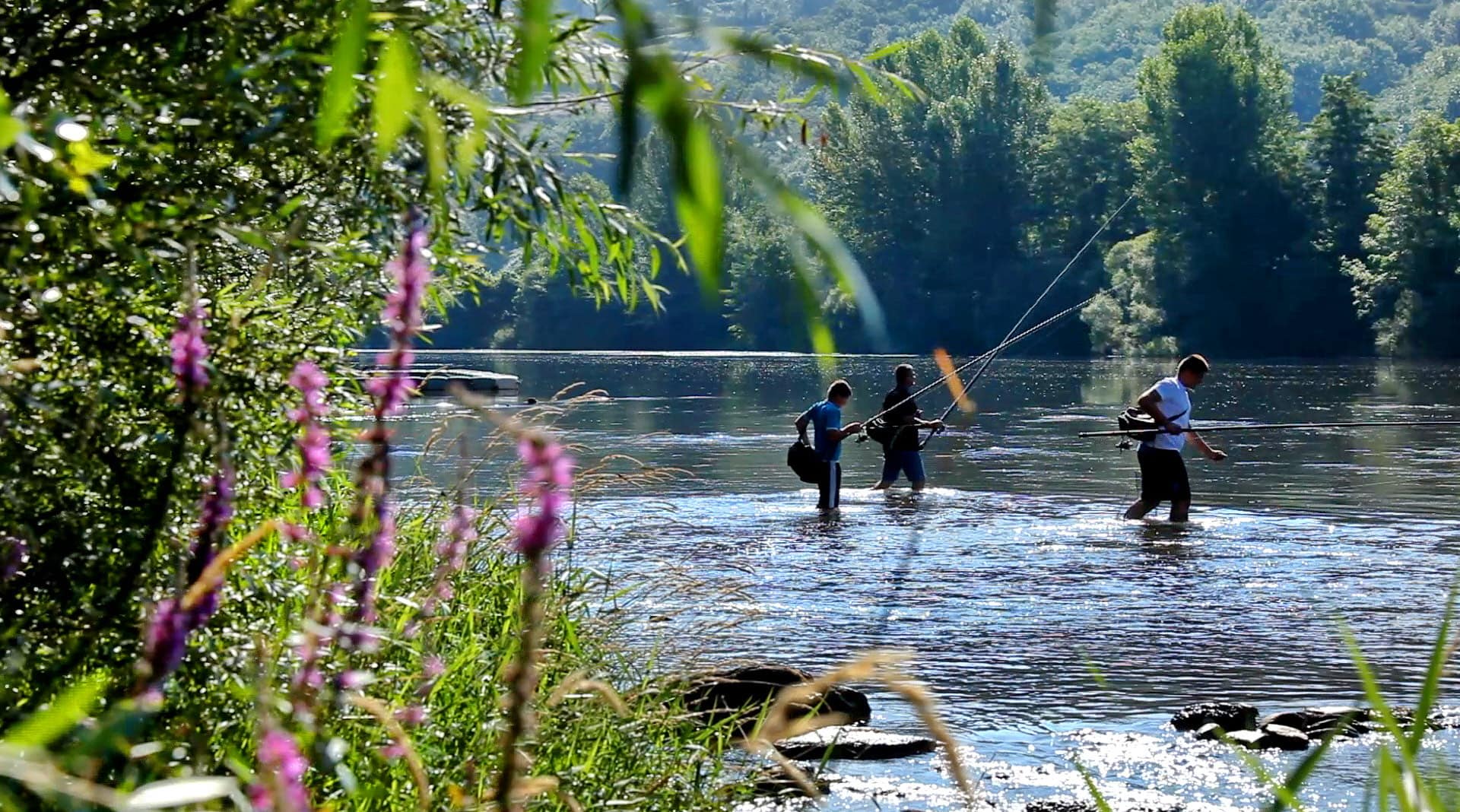
The next beat is the longest in the area: 14,000 metres on both banks, from the Lastours weir at Lisle-sur-Tarn down to the Rabastens weir.
This is the right ground when you want space and quiet. You can fish from the bank or from a boat, and the length means you can move without running into anyone, even on a Sunday in summer.
The Vère, for coarse fish
Head north. The Vère crosses the vineyard — but, contrary to what people assume, it does not flow into the Tarn: it is a tributary of the Aveyron, which it joins at Bruniquel. It is not a predator river: it is coarse fish country — barbel, chub, soiffe.
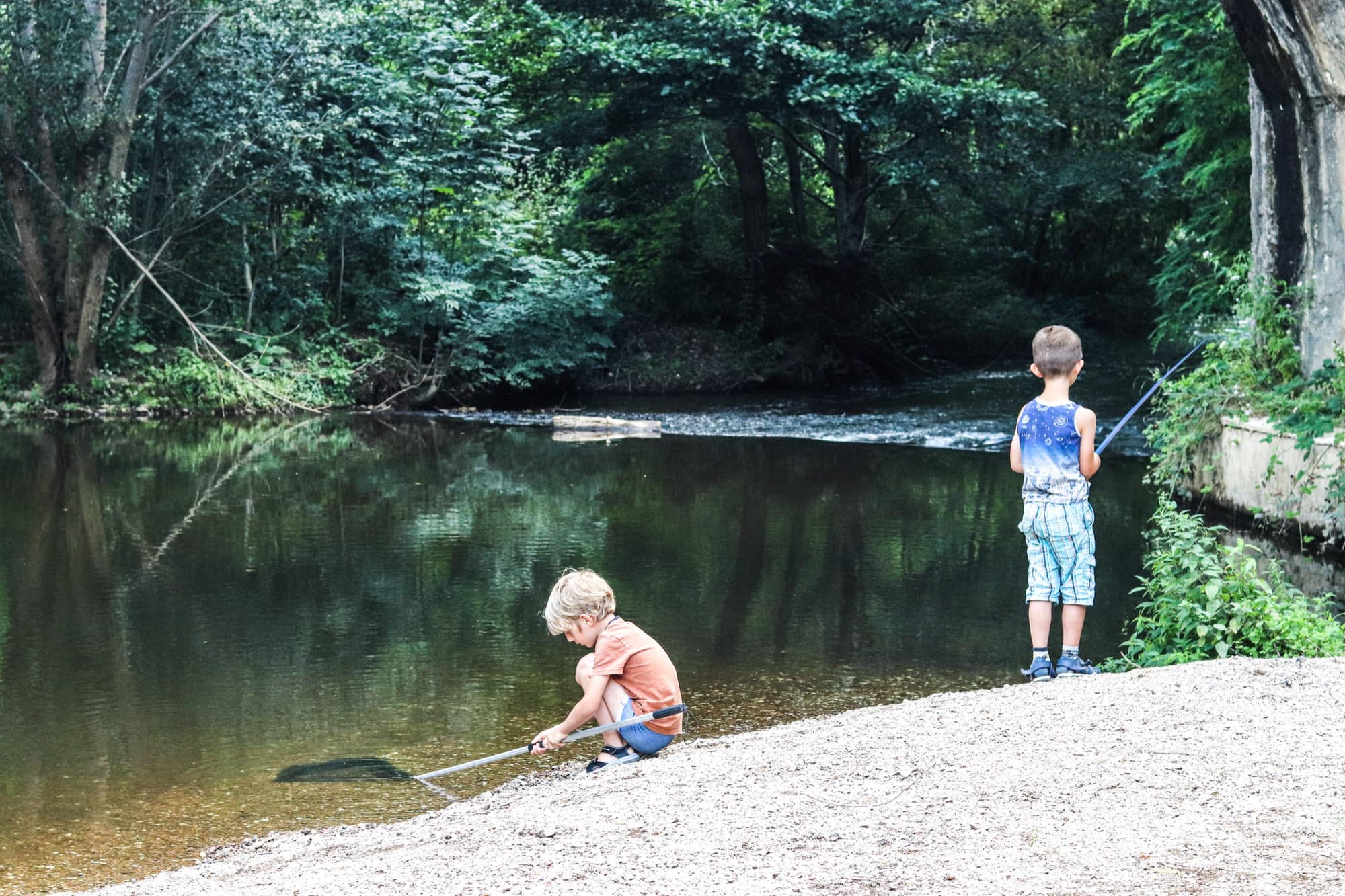
It is less spectacular and finer fishing, often better suited to a beginner or to bringing a child along: the fish are plentiful, the water is clear, and you can see what you are doing. The setting does no harm either, between vines and dovecotes.
The Ségala, thirty-eight minutes away
For a complete change of register, head up into the Carmausin-Ségala — 33 kilometres, 38 minutes. Three waters share the ground there.
The Viaur offers variety in fast water, and near the Thuriès reservoir you will find zander, pike and perch. The Cérou is also a fast-water river; downstream of the Saint-Géraud reservoir you can take trout. And for stillwater fishing there are the Roucarié and Endrevié lakes, along with the Nicou and Dynamitière basins.
What it actually costs
This is the part that surprises people most, and it is worth spelling out.
The annual adult permit is €87 for the Tarn department — €114 for the interfederal version, valid in 91 departments. But the real point is elsewhere, in the short options: the weekly permit is €36.50, and above all the day permit is €12 from June to December (€20 from January to May).
Twelve euros for a day on the Tarn is less than most activities in the valley. And for children it is something else again: €8 for the whole year under 12, €27 for 12 to 18. The women’s discovery permit, single rod, is €42.
Everything is available online at cartedepeche.fr or from approved agents of the department’s 43 angling associations.
The dates, and a rule few people know
In first-category water, trout runs from 14 March to 20 September 2026: minimum size 23 cm, six fish a day.
In second category — the Tarn at Gaillac — predators are open from 25 April 2026 to 31 January 2027, three a day, with minimum sizes of 60 cm for pike, 50 cm for zander and 30 cm for black bass. Crayfish run from 11 July to 20 September.
That leaves one local rule which explains a ban that makes little sense at the time: in the week before the first-category opening, Monday to Friday, fishing for rainbow trout is prohibited. That is when the associations stock the rivers, and the departmental rules are there to stop the fish being taken straight back out.
And if you would rather swim
The Tarn is not only for this, of course. Where you can get in the water — and where you should not — is in our piece on swimming around Gaillac. Just be aware that the two uses do not always sit well together: supervised bathing areas are not fishing swims.