Heritage
The Fine Arts museum of Gaillac
At the heart of the Foucaud park, the château of the same name houses the Fine Arts museum of Gaillac: nineteenth- and twentieth-century painting and sculpture, in a residence overlooking one of the South's finest gardens — open and free all year round.
See on the map ↓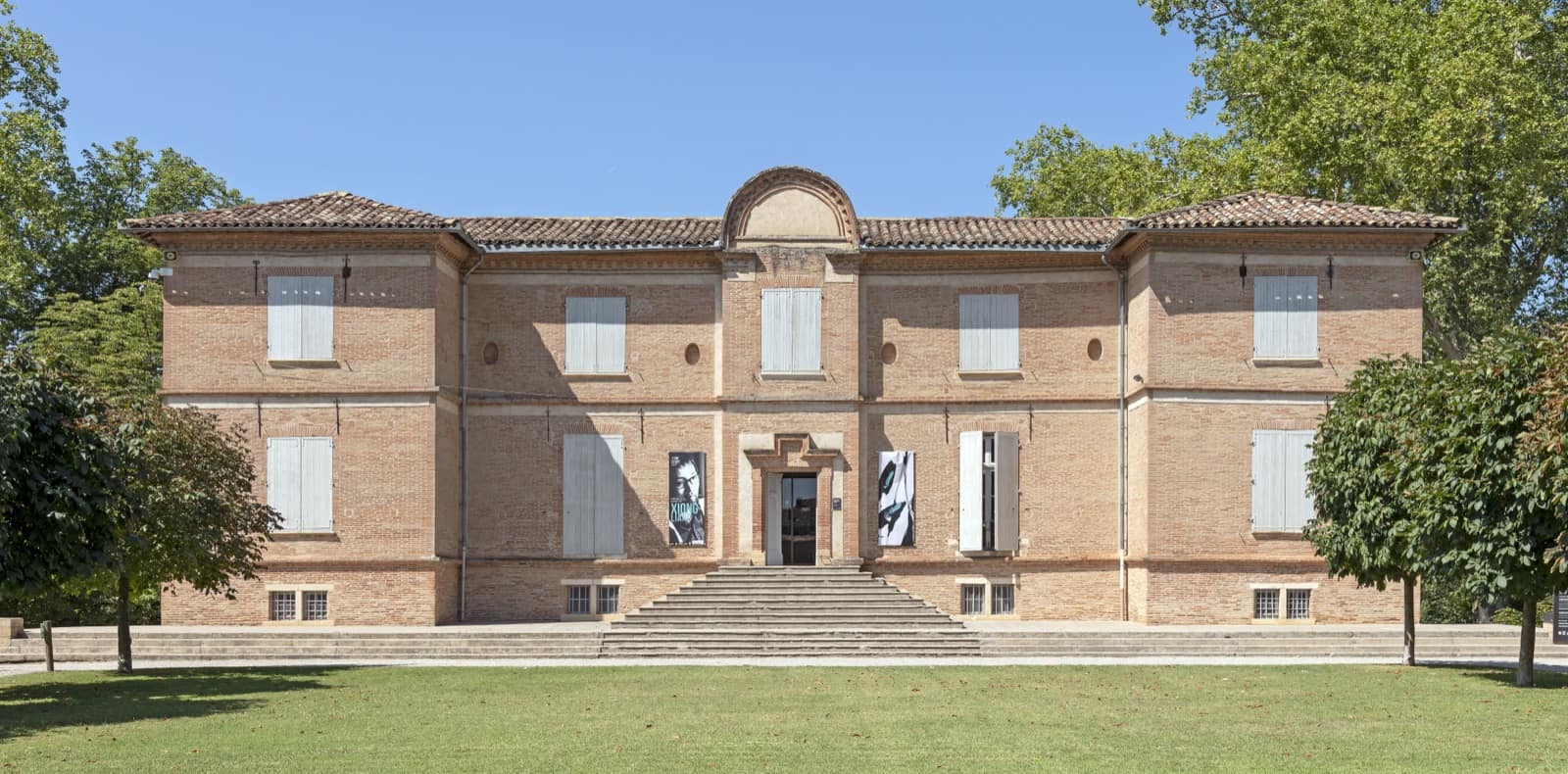
No need to take to the road to see a château in Gaillac: there’s one in town, set in the middle of a park laid out under Louis XIV. Château de Foucaud — also known as Château d’Hutaud — now houses the Fine Arts museum, and it’s perhaps the gentlest visit in town, because it’s earned at the end of an avenue, in the shade of the trees.
A listed château in its park
Château de Foucaud dates from the early seventeenth century. The town bought it in 1903 — the mayor of the day was looking for a home for the paintings of the Gaillac artist Firmin Salabert — and opened its Fine Arts museum there in 1934; the collections were entirely rehung in 1994. The château, its reading pavilion and its park are listed Historic Monuments (the pavilion from 1935, the château and park in 1945).
The park drops towards the Tarn in terraces, stone balustrades and a circular pool — a garden whose tiered, Italianate design is often compared to the Villa d’Este. It’s one of the largest old gardens in the South, open to all, free, all year round. Many people in Gaillac come for the park alone, picnic, and leave without pushing the museum door. They’re wrong to: at the top of the terraces, the château keeps the best.
The collections
The holdings are richer than you’d expect for a town this size: around 500 paintings, 700 drawings, 200 prints and 63 sculptures, spread over two floors. The route runs from early-nineteenth-century neoclassicism to post-war modernism, by way of Romanticism, the Barbizon school, Impressionism and Orientalism — the history of painting seen from the provinces, without showing off.
The heart of the collection is local. Firmin Salabert (1811-1895), a pupil of Ingres and the founding donor, is widely represented: his Bathers, a view of the place du Griffoul, a Portrait of Ingres. Beside him, the painter Henri Loubat (1855-1926) — The Annunciation to the Shepherds — and a whole generation of Tarn artists: Charles Escot, the Tournons father and son, Gaston Durel, Marie Bermond. A ground-floor room is given over to the sculptor Jules Pendariès (1863-1933), with his marbles Aux champs, The Muse and the Poet and L’Entrave. And here and there, a few unexpected portraits — from the Rothschilds to Ingres himself.
The museum doesn’t live on its permanent collection alone: each year it stages temporary exhibitions (recent years have seen Georges Rouault and Tarn painters). The up-to-date calendar is published on gaillac.fr — worth checking before making a special trip for an exhibition.
One of Gaillac’s three museums
The Fine Arts museum forms, with the Abbey museum and the Philadelphe Thomas natural history museum, the trio of municipal museums. A single 8-euro pass opens all three doors, and on the second Sunday of each month the permanent collections are free: enough to chain the fine arts, the abbey’s sacred art and Dr Thomas’s cabinet of curiosities together in a single day.
On show
-
Exhibition · 11 Apr – 30 Aug
Portraits of an abbey church — picturing Saint-Michel de Gaillac
How have people looked at, drawn and photographed Saint-Michel Abbey down the centuries? The Fine Arts museum brings together engravings, paintings and photographs to tell the monument through the eyes of those who pictured it.
Find out more →