Heritage
The bastides of the Gaillac area
Thirteenth-century new towns, a grid plan, a great square lined with arcades: the bastides tell a different story from the châteaux. Around Gaillac, Lisle-sur-Tarn, Castelnau-de-Montmiral and Cordes-sur-Ciel are the finest — alongside the fortified villages that surround them.
You come to the Gaillac area for the châteaux and the wine, and you often leave marked by something else: its bastides. These medieval new towns have no keep and no lord in majesty — they have a square, arcades, and an almost modern idea behind the stone. Three of them, all born of the same hand, are among the finest in the South-West.
What exactly is a bastide
A bastide is a new town, founded mostly between 1222 and the mid-fourteenth century, on a regular, often grid-like plan. At its centre lies not the church but a square lined with covered arcades (the couverts), the heart of the market and of trade. And, above all, a charter of franchises: liberties, lighter taxes, a form of self-rule granted to the inhabitants. That is what sets the bastide apart from the castelnau (a village huddled below a castle) and the sauveté (born around a church). A town conceived all at once, to live and to trade: that is the bastide.
Lisle-sur-Tarn, the Tarn’s first bastide
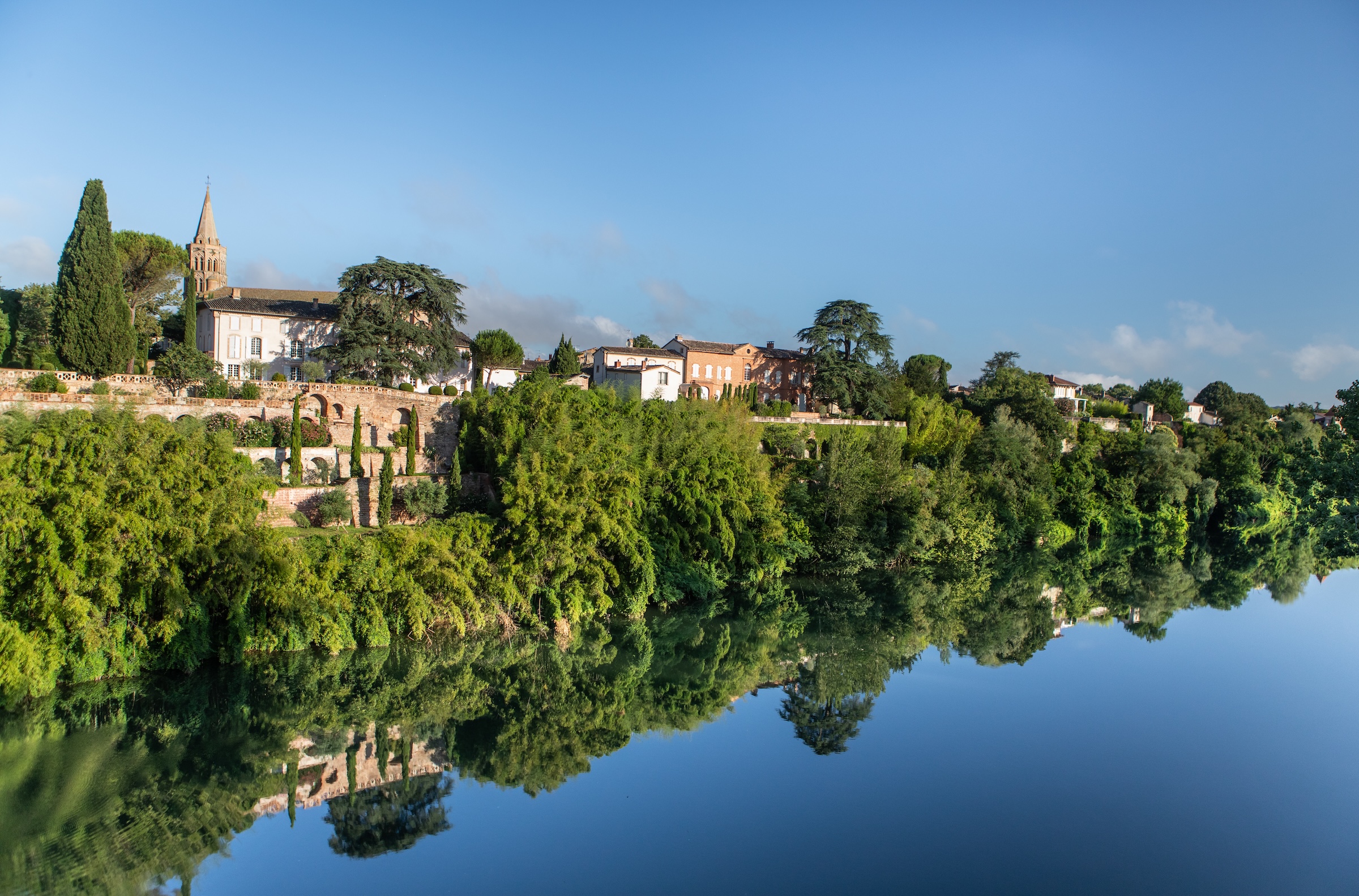
It is said to be the first in the department: Lisle-sur-Tarn was founded around 1229 by Raymond VII, Count of Toulouse, in the wake of the Albigensian Crusade. Its heart is an exceptional square — place Paul-Saissac, 4,425 m², which the town presents as the largest arcaded square in the South-West. All around run continuous arcades, brick and half-timbered façades, and six pountets, those covered passages that bridge the streets from one house to the next.
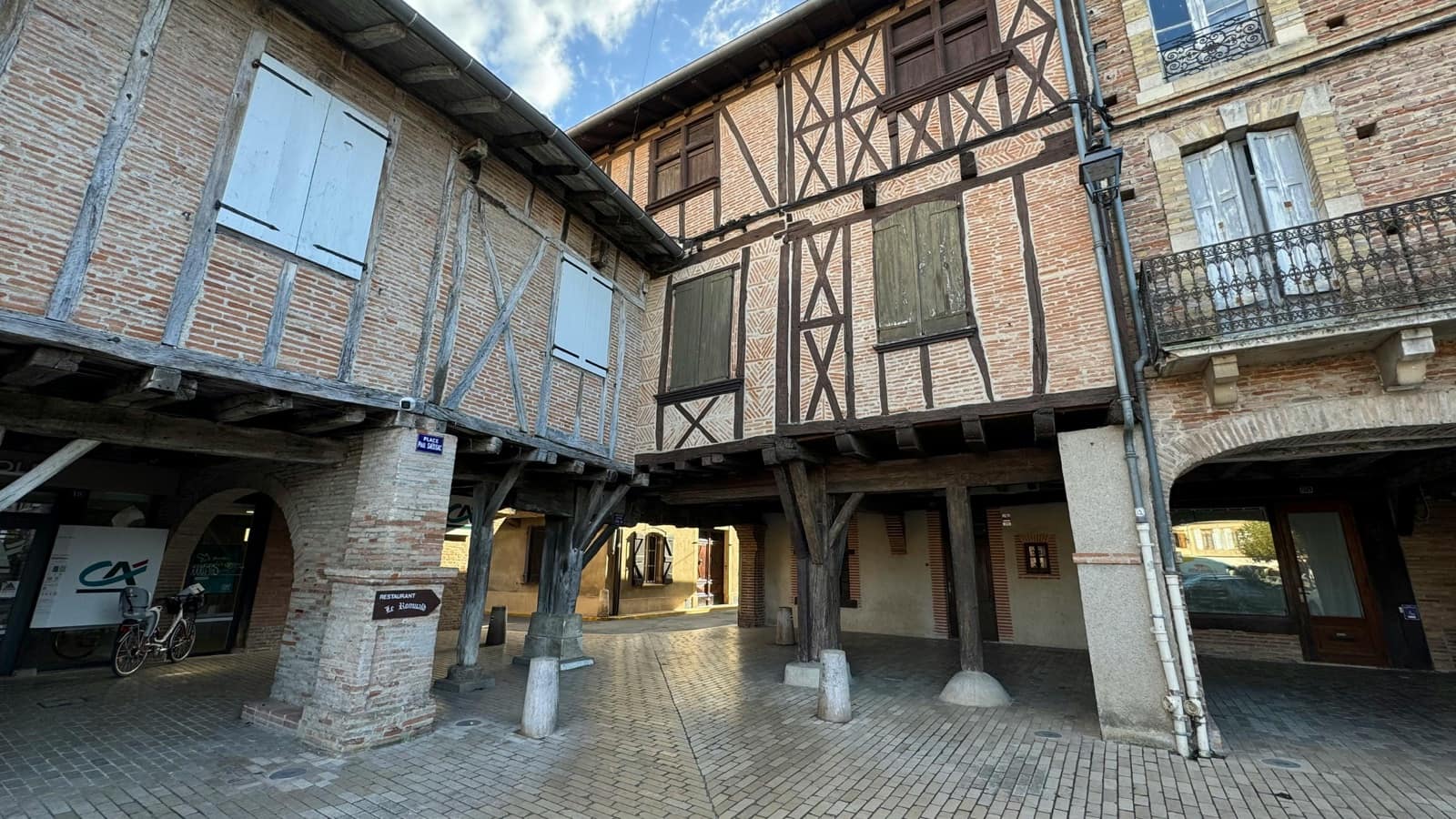
At its centre, the Griffoul fountain — a listed Historic Monument, its lead basin dating from the thirteenth century, its bronze from 1611 — recalls that Lisle was a prosperous town. The church of Notre-Dame de la Jonquière raises its Toulouse-style brick bell tower some fifty metres up, and the Raymond-Lafage museum holds the drawings of the local-born artist. The town long kept a port on the Tarn, down which the wines travelled: the bastide and the vineyard, even then, went hand in hand.
Castelnau-de-Montmiral and its place des Arcades
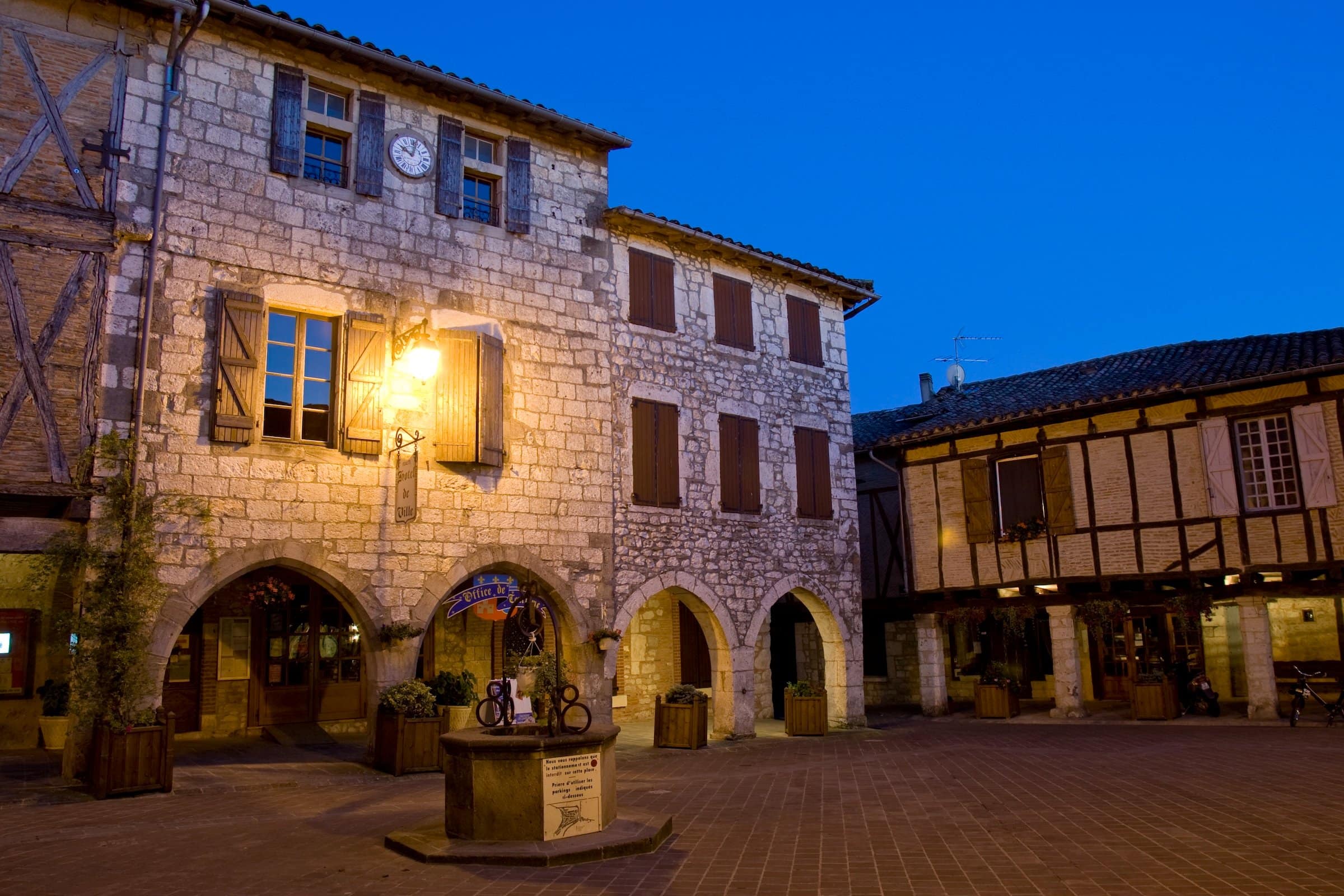
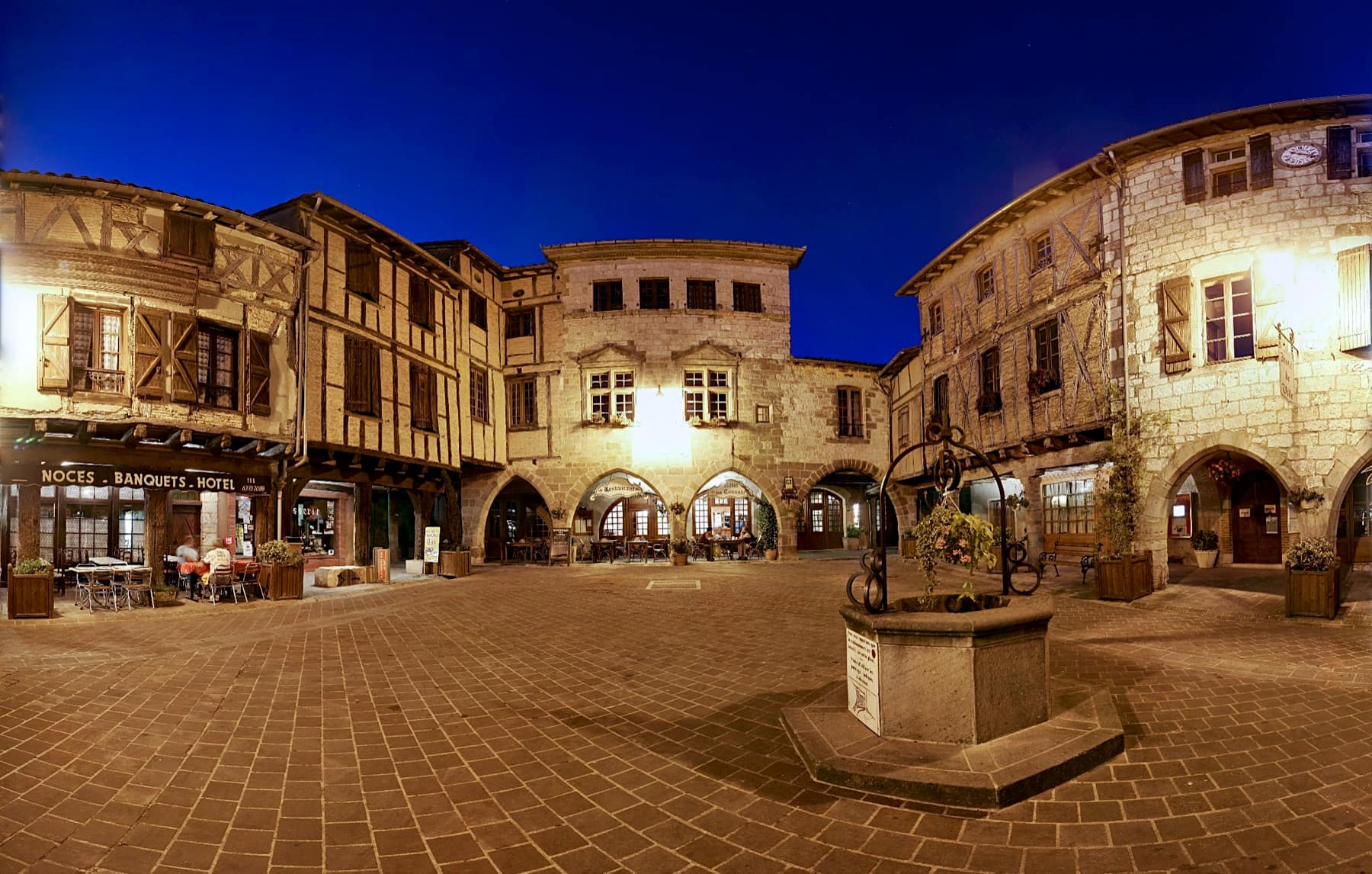
Higher up, on a spur above the Vère valley, Castelnau-de-Montmiral was born in 1222, of that same Raymond VII. Its name points to a castelnau origin, but it took shape as a hillside bastide, and that is how it is visited: its place among France’s Most Beautiful Villages is well earned. The place des Arcades, ringed with houses on pointed arches, is one of the most harmonious in the Tarn — the one in our photo, at nightfall.
The church of Notre-Dame de l’Assomption holds a treasure in the literal sense: the reliquary cross of the counts of Armagnac, a masterpiece of early-fourteenth-century goldwork, set with more than three hundred precious stones, once given by the Avignon pope John XXII. A piece so rare that it sometimes travels for exhibitions: best to check it’s there before making the trip just for it.
Cordes-sur-Ciel, the bastide in the sky
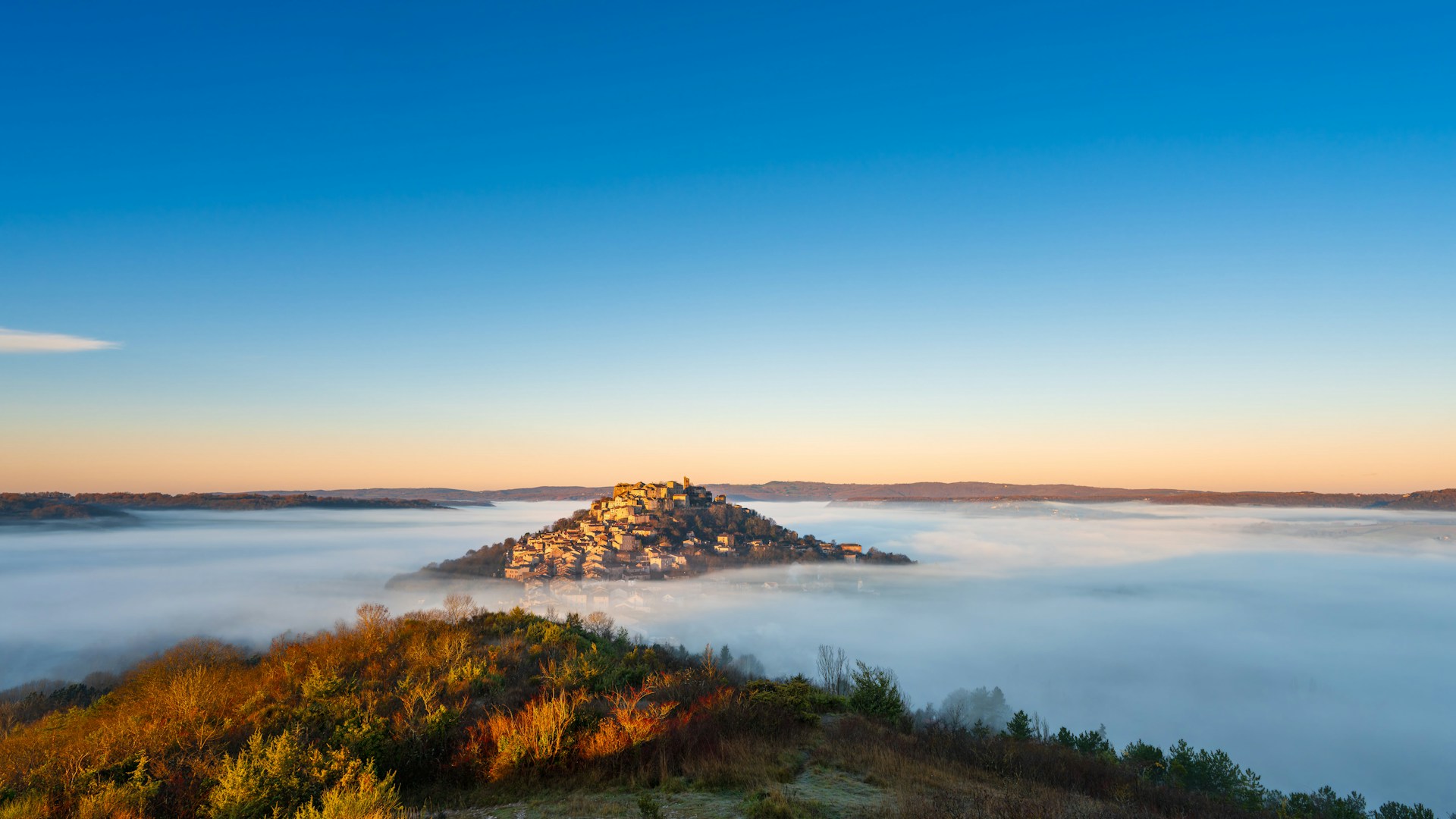
Some twenty kilometres north, Cordes-sur-Ciel completes the trio — and some call it the first bastide in France. Also founded in 1222 by Raymond VII, it’s a hilltop bastide clinging to its peak, climbed by cobbled lanes lined with Gothic houses and carved façades. When mist rises from the valley, the village seems to float: hence its name, “Cordes in the Sky”. It’s the most spectacular of the three, and the busiest — best seen early in the morning or late in the day, once the coaches have gone.
Puycelsi and Bruniquel, the fortified villages
Two names often come up beside the bastides, and we should be honest: they aren’t ones. Puycelsi, perched at the edge of the Grésigne forest, is a fortified medieval village — ramparts, gates, winding lanes, without a bastide’s regular plan. Bruniquel, just beyond, in the Tarn-et-Garonne, is a castral village crowned by its two castles. Both are listed among France’s Most Beautiful Villages, both are worth the detour — they’re simply fortified villages, not arcaded new towns. The distinction is part of the pleasure of understanding what you’re looking at.
From Lisle to Cordes, you can string the five together over two days, along the valley and the hillsides. It may be the finest way to take the measure of the Gaillac area: not through its isolated monuments, but through its villages, each born of an intention, and all still standing.