Vineyard
Natural and biodynamic wines in Gaillac
Gaillac has become one of the South-West's strongholds of natural and biodynamic wine. Behind the words — organic, biodynamic, natural, which don't mean the same thing — there are growers, native grapes and bottles that divide as much as they seduce. A guide to finding your way.
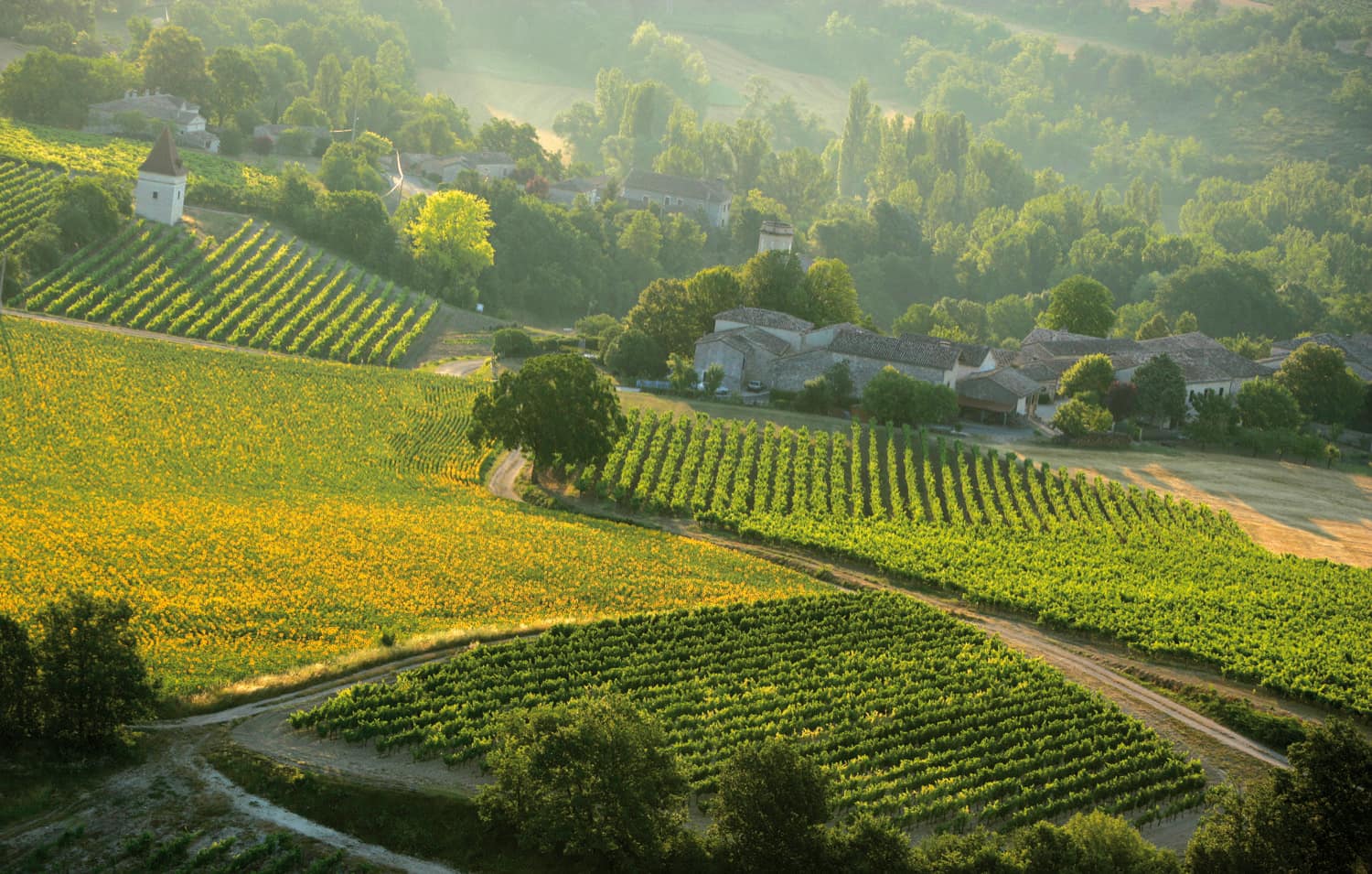
There’s a certain logic to Gaillac becoming a land of natural wine. This is a vineyard that never let go of its native grapes, that saved its forgotten varieties one by one, and that has a taste for doing things differently. The move to organic, biodynamic and natural wine came early and strong here: today, some of the appellation’s most closely followed estates work this way. You just need to know what these words mean, because they are not synonyms.
Organic, biodynamic, natural: three different things
They’re often used interchangeably — wrongly. Organic happens in the vines: no chemical weedkillers or fertilisers, under an official, audited set of rules. Biodynamics starts from organic and goes further — plant-based preparations, work timed to the rhythms of living things, Demeter or Biodyvin certification. Natural wine is decided mostly in the cellar: nothing added, or almost, and sulphur kept to a minimum. It’s the only one of the three with no official label: it’s a commitment, defended estate by estate.
The consequence is worth saying plainly: a natural wine doesn’t always taste like what you expect. It can be cloudy, lively, faintly fermentative, and change from one bottle to the next. That’s the price of winemaking without a safety net. You approach it with curiosity.
The estates that led the way
The name that comes up most is the Domaine de Causse Marines, at Vieux, north of Gaillac: Patrice Lescarret has long made biodynamic and natural wines here that have become a reference far beyond the Tarn. Close by, the Plageoles family farm their native grapes organically — we tell their story in our piece on the forgotten grapes of Gaillac. And it was at Château de Mayragues, near Castelnau-de-Montmiral, that the Gaillac area’s first biodynamic estate was certified, back in 1999.
To the east of the appellation, Château les Vignals combines all three commitments — organic, biodynamic and natural — still a rare case. Others work organically without fanfare: Domaine de Larroque, Mas d’Aurel, Château de Terride, and Domaine René Rieux, whose vineyard is run by a sheltered workshop (ESAT) — a quiet way of tying wine to social inclusion. The map above places them; each has its own character.
How to taste without going wrong
Simplest is to push open a cellar door — often by appointment, as these are small estates. To compare without driving the back roads, the Maison des Vins de Gaillac, in the cellars of Saint-Michel Abbey, gathers the whole appellation and lets you set a classic organic alongside a sharp natural.
One last tasting tip: let the bottle come to temperature, open it a little ahead, and accept that it lives. Natural wine isn’t a technical feat, it’s a snapshot of one year and one hand. In Gaillac, those hands are many — and it has become one of the good reasons to come here, glass in hand.