Heritage
The dovecotes of the Gaillac vineyard are not decorative
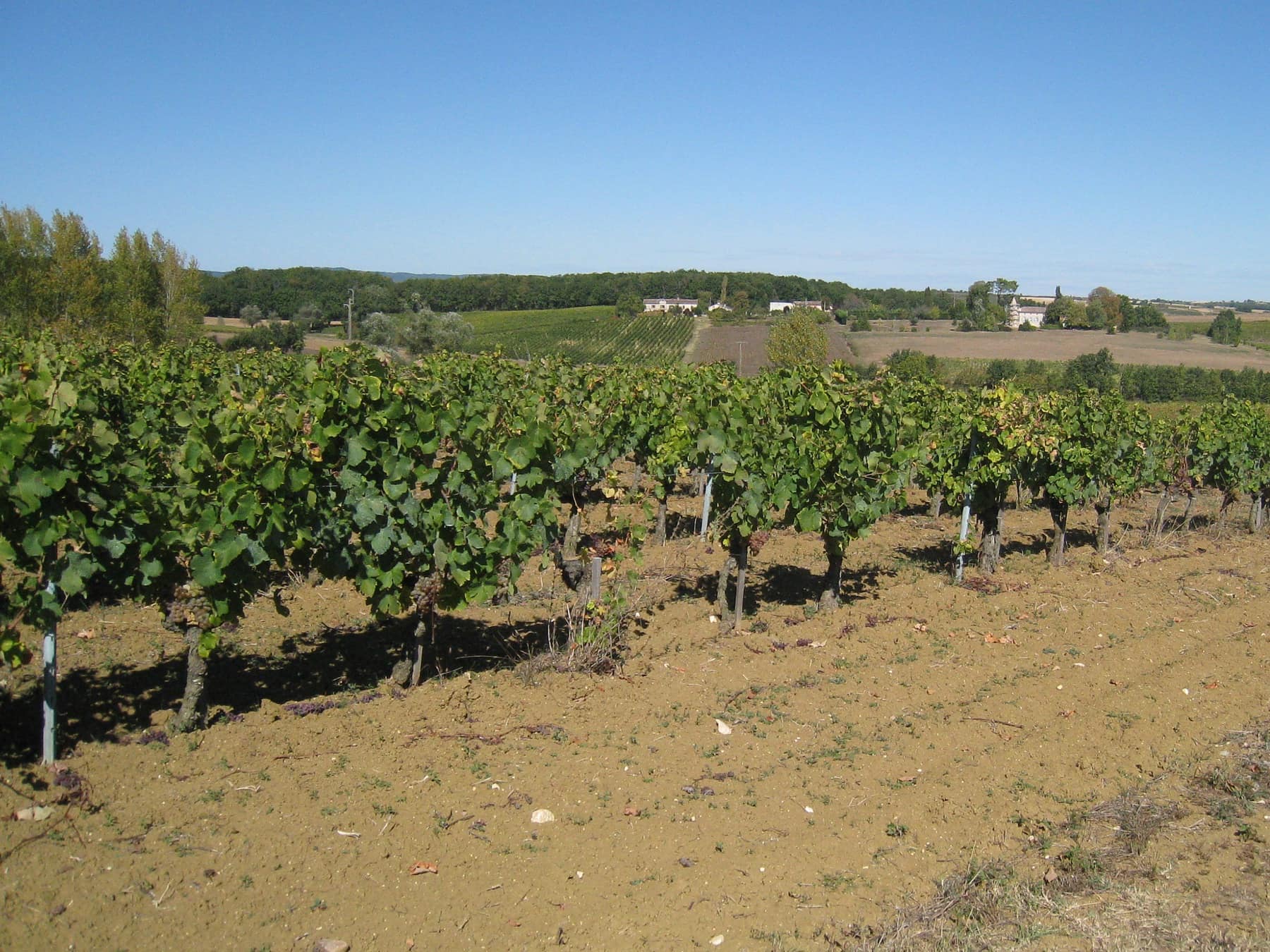
People photograph them as curiosities dropped among the vines. They were factories. For centuries pigeon droppings were the only fertiliser allowed in the vineyard — which is why the Tarn still has more than 1,700 of them.
There is an object you meet everywhere around Gaillac and that almost nobody understands. People photograph it as a curiosity, an architect’s whim dropped between the rows. The truth is the other way round: a dovecote was a factory, and the vines around it explain why it exists.
Colombine, or why there are more than 1,700
Here is the fact that puts everything the right way up. For centuries, colombine — pigeon droppings — was the only fertiliser permitted in the vineyard.
A dovecote was therefore not an ornament or a display of wealth: it was a fertiliser production unit, attached to a crop that needed one. Its presence is not decorative but functional, and its density follows the vineyard’s exactly.
The Tarn today has more than 1,700 dovecotes still visible, of all types — a figure with almost no equal in any other French region. It does not tell you how rich the area once was: it tells you how much of it was planted.
Recognising a Gaillac dovecote
They are not all alike, and the eye learns fast. The Tarn holds several families: the Toulouse type, the Castres type, the Saint-Sulpice type, the pied-de-mulet — and the Gaillac type.
The Gaillac one is known by three simple things. A square tower, first, where other types stand on pillars or lean against farm buildings. A tall four-sided roof, next, whose height is what strikes you from a distance. And a génoise last: that moulding of stacked tiles running beneath the roof edge, at once decoration and water throw-off.
Once you have those three elements, you will see nothing else driving between Cahuzac-sur-Vère and the slopes.
Thirty winegrowers against neglect
A dovecote that no longer serves a purpose eventually falls. The roof goes, water gets in, the tower follows — and since they stand on private land, their fate rests with owners who have no use for them.
This is where a story worth knowing comes in. Les Z’Elles Gaillacoises, an association of around thirty women winegrowers founded a decade ago, set themselves two joined-up aims: to defend the wines of Gaillac, and to save what gives them their memory. Each year they choose an abandoned dovecote and restore it, funded by their own events.
This is not a heritage body taking an interest in wine; it is the reverse — producers who have understood that the buildings tell the story of their trade. It would be hard to find anything more coherent.
Where to see them, and how
A dovecote trail is waymarked across the department, and can be done by car, by bike or by motorbike depending on the version. It is the simplest way to string several types together in one outing and train the eye.
One rule to respect, and it is absolute: almost all these dovecotes stand on private land. They are looked at from the road or the track. You do not walk into a plot to photograph one closer, and you do not go through an open gate.
The easiest to reach is the one at Mas d’Aurel, at Donnazac: the estate welcomes visitors to its shop, and its traditional dovecote stands exactly where vans spend the night — a system we set out in our piece on the subject.
What they say about the vineyard
There is one last reason to care, and it goes beyond architecture. Dovecotes are the built trace of a viticulture from before synthetic inputs — a farming system that had to manufacture its own fertility on site, with what it had.
It is the same vineyard that today holds an unusual density of organic and biodynamic estates, and that has kept grape varieties almost nobody else grows. In this landscape, the square towers with their génoise are not picturesque remains: they are the earliest witnesses to a continuity.