Heritage
When Gaillac wine went down the Tarn by gabare
In 1253 the King of England bought twenty barrels of Gaillac. They had left here on flat-bottomed boats, down the Tarn and then the Garonne. For eight centuries the river was this vineyard's entire commercial reason to exist.
People usually explain a vineyard by its soil and its climate. For Gaillac, the better explanation lies elsewhere: it is a river.
A window onto Bordeaux, and therefore the world
Look at a map. The Tarn passes Gaillac, flows into the Garonne, and the Garonne runs down to Bordeaux. At a time when moving a barrel by road cost more than the barrel itself, that geography was worth any terroir.
From the Middle Ages to the 19th century, the Tarn was the main export window for the wine and goods produced around Gaillac. And the route was far older still: from Roman antiquity, after the first century AD, this commercial axis was used to reach Bordeaux, a centre of consumption and re-export.
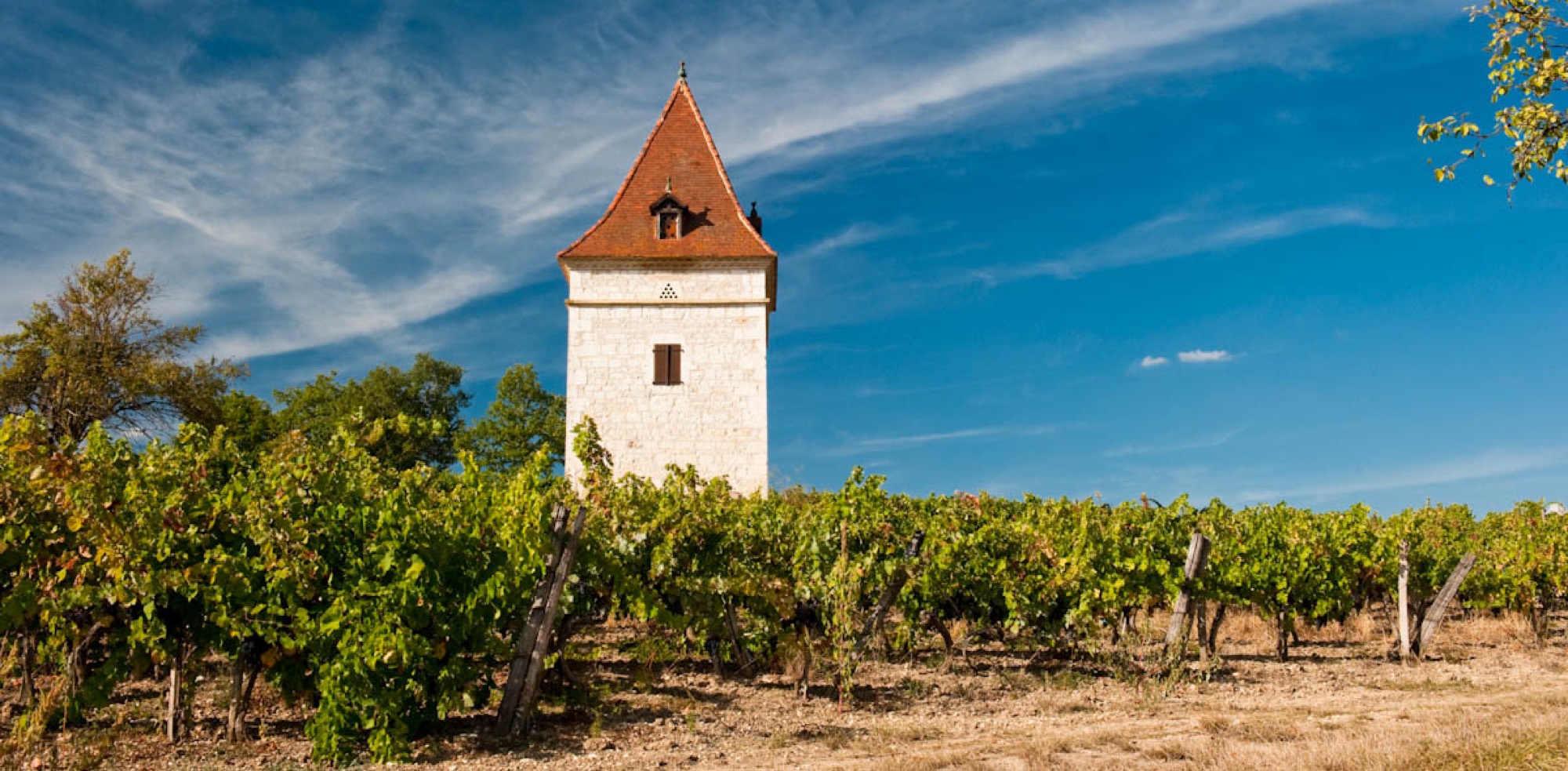
A vineyard took root here because it could sell elsewhere. Everything else — the grapes, the methods, the dovecotes — followed from that.
1253: the King of England places an order
There is one date that sums the thing up better than any argument. In 1253, Henry III of England bought twenty barrels of Gaillac wine.
Twenty barrels is not a diplomatic gift: it is an order. The wine made on these slopes was then an export product, going down the Tarn, through Bordeaux and across the Channel. For a vineyard presented today as a well-kept secret, that is a useful adjustment of perspective.
The gabare, a boat built for this river
Transport was by gabare: flat-bottomed boats with shallow draught, raised bow and stern, measuring eight to twenty-five metres.
Every one of those features answers a constraint of the Tarn. The flat bottom and shallow draught, because the river is shallow and changes level with the season. The raised ends, to meet shoals without burying into them. The variable size, according to the stretch and the load.
And one limitation, which explains a great deal: these boats were made to go down. Working back upstream was an entirely different proposition — slow, costly, and often less worthwhile than selling the boat on arrival. The river economy ran one way.
What remains, and where to see it
No gabare survives on the Tarn at Gaillac. But the river remains, the banks remain, and above all there is a museum that tells precisely this story.
The Abbey Museum, set in the vaulted cellars of Saint-Michel, gives part of its route to the town’s origins, its port and its vineyard. Entry is €2.50. It is the only place where this history is shown rather than recounted, and it stands a hundred metres from the river it describes.
On the way out, walk down to the banks. The Pont Saint-Michel, the weir, the deep hole below the abbey that anglers know: all of it belonged to a port landscape.
Why the river trade stopped
A last point, and a counter-intuitive one. The end of the river trade was not a decline.
It was not that the vineyard collapsed or that the wine stopped selling. It was that the railway arrived in the 19th century, and a wagon is faster than a gabare, goes up as well as down, and does not depend on the water level.
The vineyard did not lose its market: it changed vehicle. And the same railway line today makes Gaillac to Albi in fourteen minutes — another story, but the same track.
What it changes about the tasting
This history is not merely anecdotal. A wine for distant export had to travel: to hold for weeks in barrel, survive the movement, arrive drinkable. That selects for certain styles of wine, certain grapes, certain ways of keeping it.
It is in that context that the Gaillac character should be read — a palette of grapes nobody else kept and a method for bubbles that predates champagne. These singularities are not folkloric curiosities: they are what remains of a vineyard that spent eight centuries producing to go somewhere else.