Heritage
Villeneuve-sur-Vère and Monestiés, beyond Cordes
Two villages on the same north-east axis from Gaillac, one of them holding a masterpiece nobody expects to find there: twenty life-size stone statues, commissioned by a bishop of Albi in the 15th century. Entry €4.
Forty kilometres from Gaillac, in a village of eight hundred people, there is a sculpted group you would expect to find in a national museum. Nobody will mention it to you until you are standing in front of it.
Monestiés, and what is in the chapel
Monestiés is listed among the Most Beautiful Villages of France, tucked into a meander of the Cérou. It is pretty, and that is not the reason to go.
The reason is the Saint-Jacques chapel and the twenty polychrome limestone statues it holds. They date from the 15th century, they are life-size, and they depict the last three episodes of the Passion: the crucifixion, the Pietà, the entombment.
This is not a village-church group picked up by chance. It was commissioned by Louis I d’Amboise, bishop of Albi — the same circle, the same period and the same ambition as Sainte-Cécile cathedral. The group has stood in the chapel since 1774, having moved before that.
Entry costs €4, €3.50 reduced. A combined ticket from €4.50 adds the Bajen-Vega museum, devoted to the Spanish painter couple who took refuge here after the civil war. A guided tour is €5, and groups form from fifteen people.
Four euros for twenty 15th-century statues is one of the most lopsided ratios in the region, and in the right direction.
Villeneuve-sur-Vère, the white one
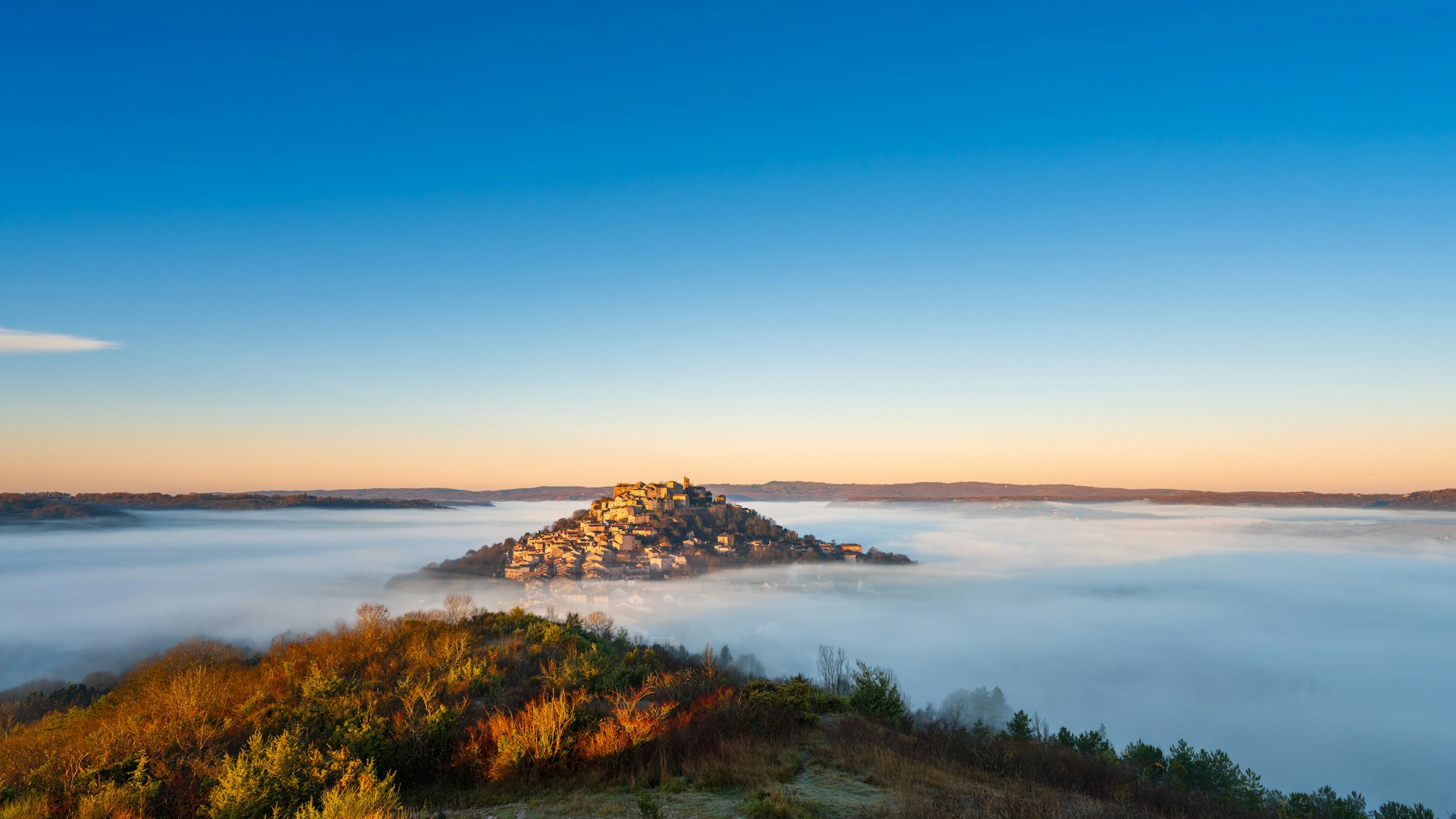
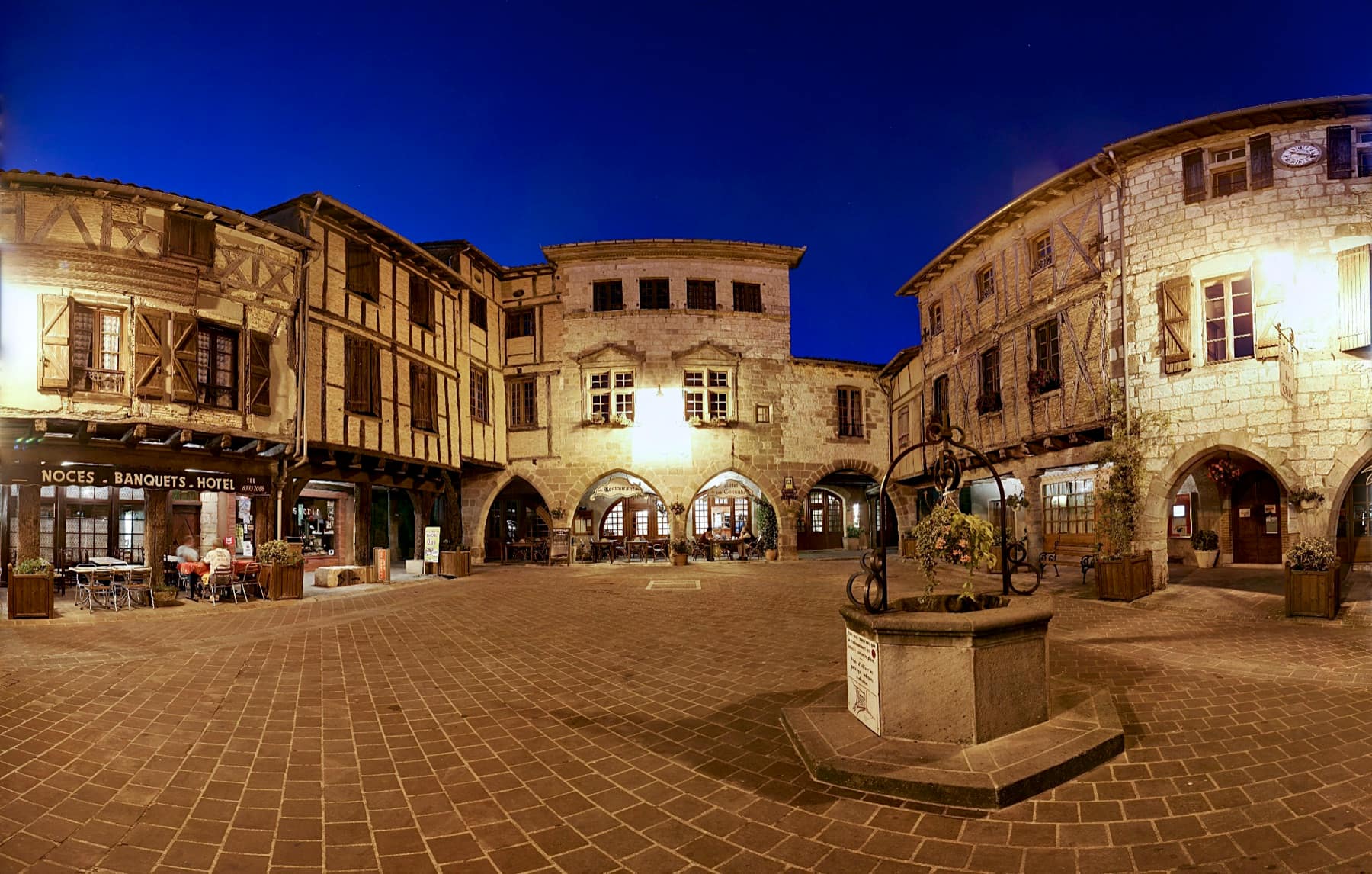
On the way, some twenty kilometres from Gaillac, Villeneuve-sur-Vère earns a stop for a simpler reason: the village is built of white stone on a rocky spur, which gave it its nickname and makes it instantly unlike the pink brick of the rest of the area.
It is a bastide founded in 1212 by Déodat Alaman, in the years following Simon de Montfort’s crusade — a new town, in the literal sense, created to gather survivors. The plan and the stone houses still carry the trace, and our piece on the bastides explains what that founding logic produced across the south-west.
There is no ticket office and no opening hours: you park and you walk.
How to shape the day
The two link up naturally, because they sit on the same north-east axis, beyond Cordes-sur-Ciel.
The sensible order is to finish at Monestiés, since it is the only one of the two with opening hours to respect. Villeneuve-sur-Vère can be visited at any hour and does not take long: half an hour on foot covers it.
If you want to fill the day out, Cordes is on the way and deserves half a day on its own — but adding all three into one day amounts to seeing none of them properly.
A note on honesty
A word, because this site is about the Gaillac area and we want the term to mean something.
Monestiés is not in the Gaillac area. The village sits on the Cérou, in the Ségala, halfway between Cordes and Albi, and belongs to a different local authority. We treat it here as an acknowledged excursion — as we do with Albi or the Aveyron gorges — and not as a vineyard village.
Villeneuve-sur-Vère is more ambiguous: geographically on the Vère, and so within the Gaillac landscape, but attached to Albi’s sphere. It is a borderline case, and we would rather say so than pretend it is not.