Heritage
The châteaux of the Gaillac area
Medieval fortress, Palladian villa, turreted wine estates: around Gaillac, no two châteaux are alike, and they don't all open the same way. Here's which to step inside, which to taste your way through, and the one you reach by sitting down to dinner.
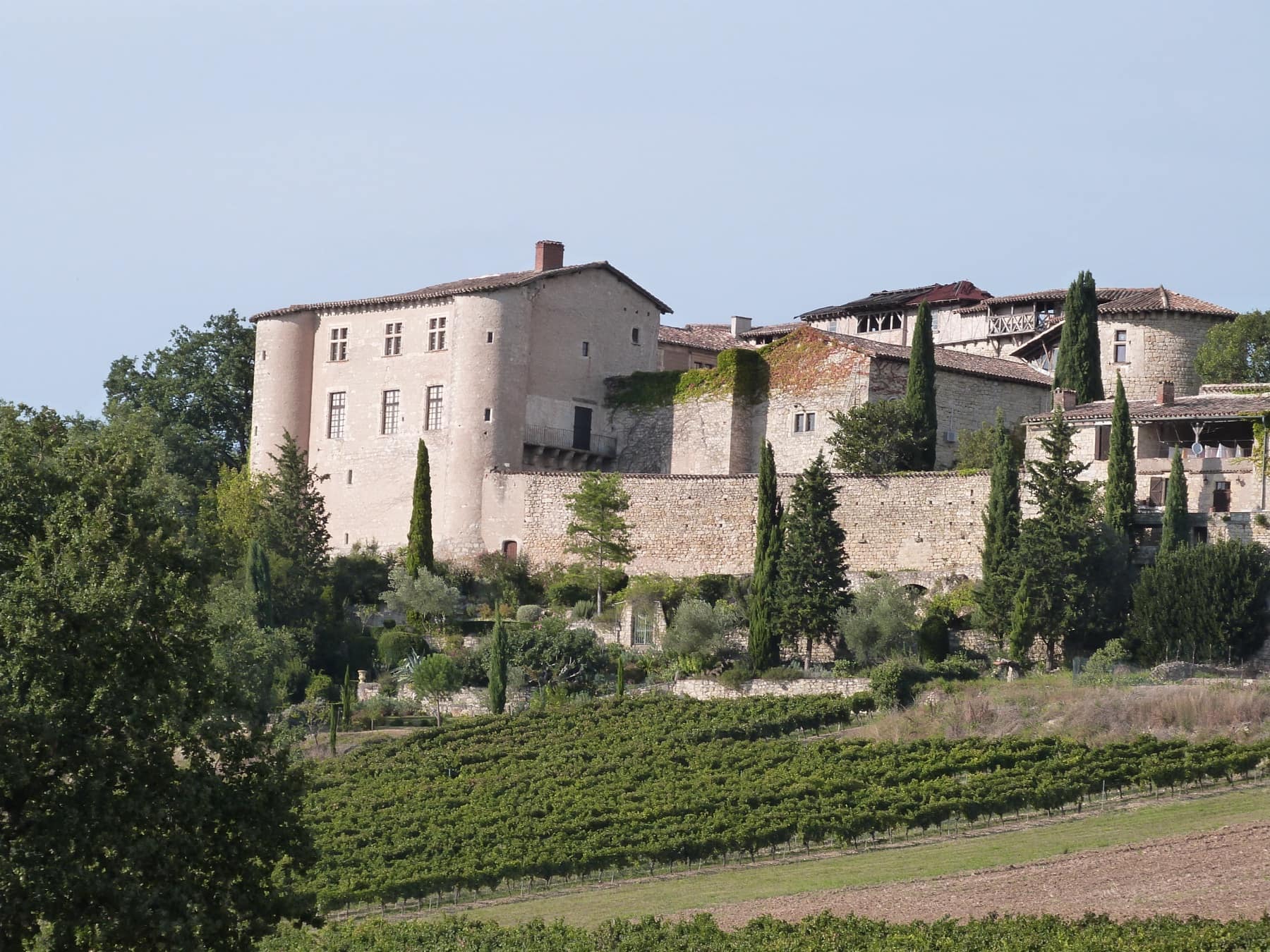
In the Gaillac area, the word “château” is misleading. You picture crenellated keeps and drawbridges; you mostly find working wine estates, where the visit ends with a glass in hand rather than at the top of a tower. That’s the first thing to know before going château-hunting between the Tarn and the hillsides: most are first and foremost wine estates, and that’s no bad thing. A few exceptions remain, where you really do cross the threshold of history. Here’s how to tell them apart.
Mauriac, a painter’s castle-studio — at Senouillac
This is the most romantic of the lot. Founded in 1214 by a Templar, the fortress of Mauriac, north of Gaillac, owes its second life to one man: the painter Bernard Bistes, who bought the ruin in 1962 and spent more than sixty years raising it stone by stone. (He’s sometimes confused with another twentieth-century painter — but it’s Bistes, born in Albi in 1941 and gone in 2020, who matters here.)
The result is part monument, part studio. You tour the restored rooms and, above all, a permanent exhibition of the master’s work hung on the upper floor. It’s one of the rare châteaux around here you enter for the building and the art, not for the wine. Open from 21 April, daily except Saturday, afternoons only: worth knowing before you push at the gate on a spring Saturday.
Lastours, the dovecote and the cellars — at Lisle-sur-Tarn
In Lisle-sur-Tarn, Château Lastours is a wine estate in the fullest sense: the same family, the Faramonds, has kept watch here since the sixteenth century, and the wine has flowed without interruption for generations. The jewel of the place isn’t a watchtower but a seventeenth-century dovecote, listed as a Historic Monument in 2015 — a brick tower of patterned arches, of which the Tarn has few finer.
The visit follows the rhythm of the estate: you push open the cellar door, open Monday to Saturday, to taste and leave with a few bottles of AOC Gaillac. To see the cellars, the formal garden and the dovecote up close, you book a guided tour. In summer, the château also opens its grounds for musical brunches — another way in.
Mayragues, medieval gone biodynamic — at Castelnau-de-Montmiral
A stone’s throw from Castelnau-de-Montmiral, listed among the Most Beautiful Villages of France, Mayragues reconciles the two faces of the Gaillac château. The building is old — twelfth and sixteenth centuries, château and dovecote both listed Historic Monuments — but the spirit is firmly alive: it was the first estate in the Gaillac area to convert to biodynamics, back in 1999.
Here they work the local grapes — Loin de l’œil and Mauzac for the whites, Duras and Braucol for the reds — and the cellar welcomes visitors all year for tasting. In summer, classical concerts ring out in the courtyard, and a handful of guest rooms let you sleep within the old walls. The kind of address where heritage isn’t a display case but a working place.
Saurs, the palace among the vines — at Lisle-sur-Tarn
A change of era and of style. Château de Saurs, also at Lisle-sur-Tarn, is nothing medieval: it’s an elegant Palladian-inspired residence, built between 1848 and 1852, set among its vines like an Italian villa stranded in the South-West. The house and its wooded grounds are on the supplementary list of Historic Monuments.
The estate, farmed organically over some forty hectares, is discovered at the cellar, over a tasting. The fine architecture is best admired from the grounds and the approaches: here again, it’s the wine that opens the doors.
Salettes, the château you visit at the table — at Cahuzac-sur-Vère
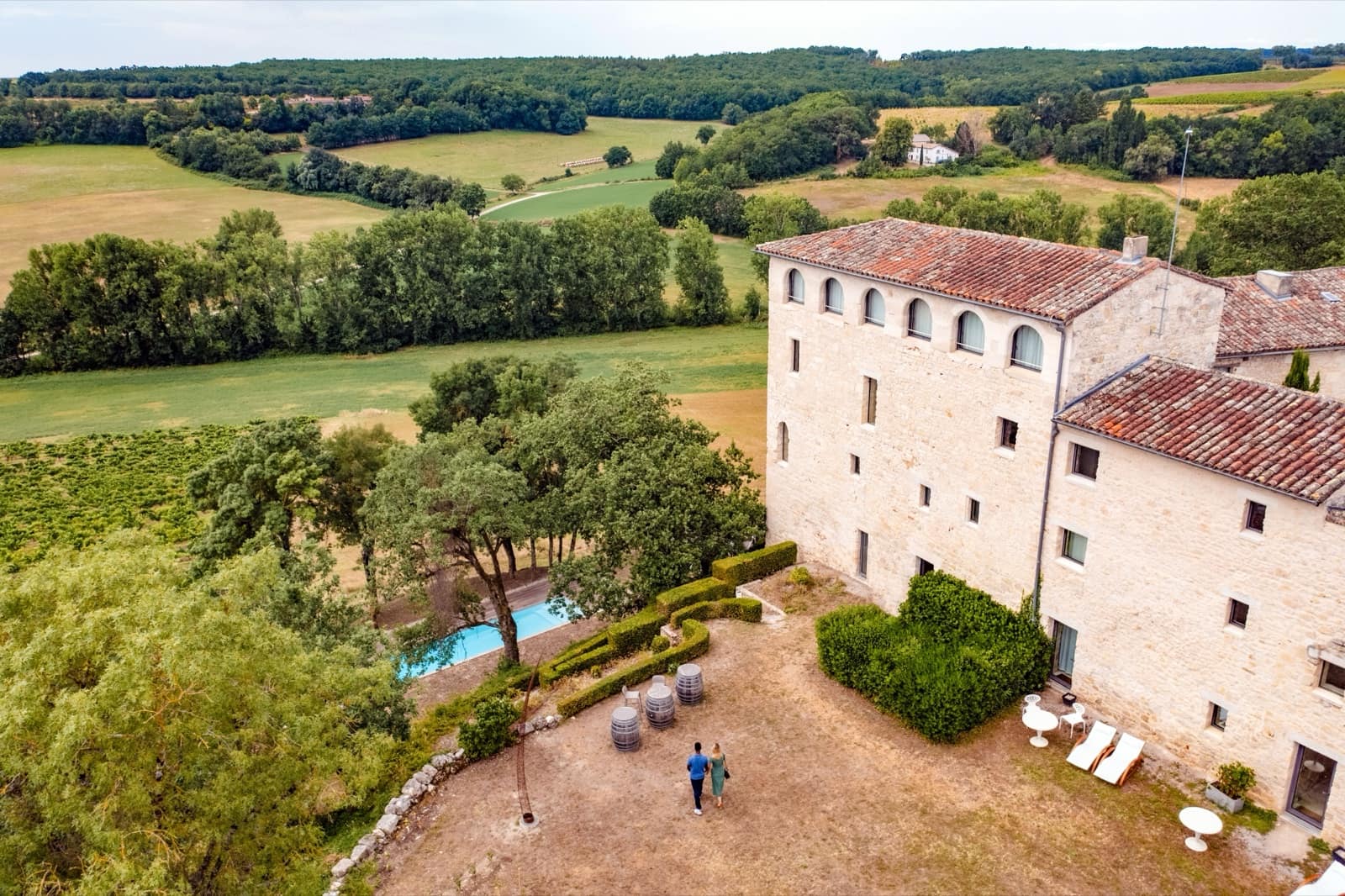
Let’s be clear about this one to spare any disappointment: Château de Salettes cannot be visited. This thirteenth-century residence, once owned by the Toulouse-Lautrec family and then by the d’Hautpouls, became a 4-star hotel in 1999, with a fine-dining restaurant and a spa. You cross its threshold only as a guest — for dinner, a night, a treatment. But what a setting: the restored old stone overlooks a vineyard belonging to the estate. A gentler way than most to sleep inside the history of the Gaillac area.
And in town: Foucaud, the château-museum — at Gaillac
No need to take to the road to see a château. In Gaillac itself, Château de Foucaud watches over a park laid out under Louis XIV — one of the largest old gardens in the South, with its terraces and orangery. The building now houses the town’s Fine Arts museum. The park itself is open and free all year round: the place to end the tour, in the shade of the trees, with nothing to book.
What you can really visit
Let’s sum up plainly. To step into a château in the heritage sense, head for Mauriac (the building and the painting) and Foucaud (the museum and the park, in town). For a tasting visit, Lastours, Mayragues and Saurs open their cellars, and you’ll see the walls as much as the vats. Salettes is savoured at the table or for the night. Cellar and museum hours shift with the seasons: a phone call before you set off will save you a closed door.